
ClickHouse Embeds Observability: ClickStack Now Built-In

Alps Wang
Mar 6, 2026 · 1 views
Bridging Observability and Database
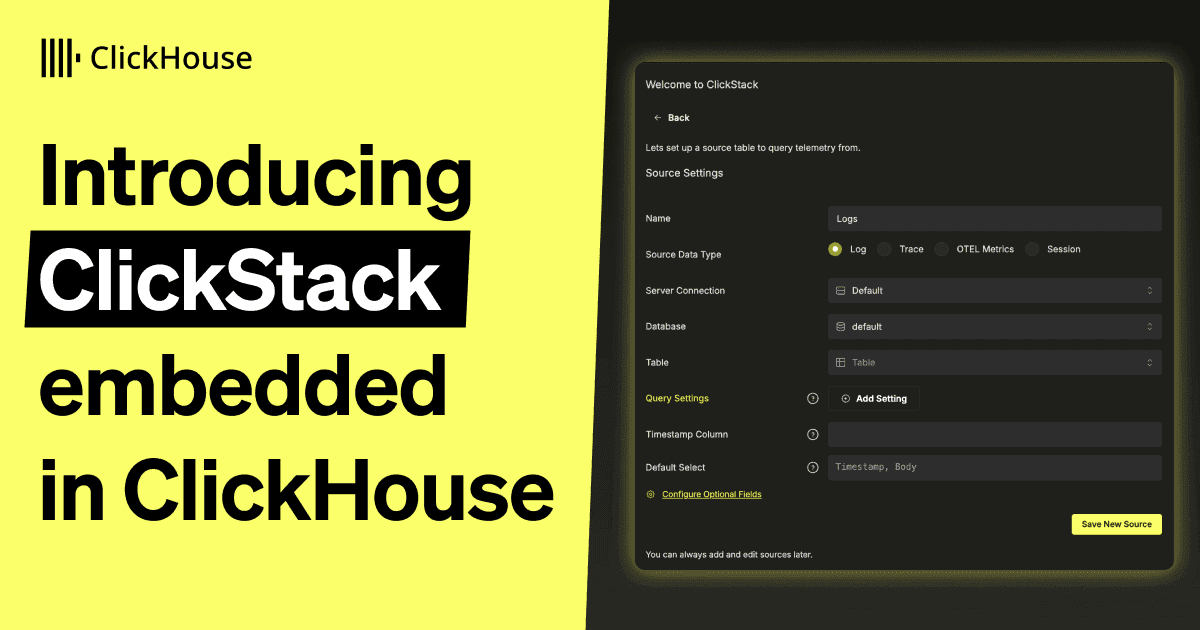
The integration of ClickStack directly into the ClickHouse binary is a brilliant move to democratize observability for local development and experimentation. By keeping the footprint minimal (under 4.1 MB) and removing complex dependencies like Node.js and Python runtimes, ClickHouse has achieved a remarkable feat of engineering. This significantly lowers the barrier to entry for users wanting to understand their database's performance and explore their data visually, without the overhead of separate deployments. The ability to simply install ClickHouse and immediately access a functional observability UI is a game-changer for learning, debugging, and prototyping.
However, the article explicitly states this embedded version is not for production. The omission of persistent state storage, alerting, and dashboard/query persistence are key limitations. While understandable for size and simplicity, this means users will still need to manage separate ClickStack deployments (Docker or Cloud) for any serious use case. The technical challenges overcome are impressive, particularly the clever use of a generated C++ file with zipped assets and a binary search for HTTP requests. This approach showcases a deep understanding of both web technologies and C++ build systems. The implications are that ClickHouse is not just a data store but is becoming a more holistic platform for data analysis and operational insight, albeit with a phased approach to feature parity across different deployment methods.
Key Points
- ClickStack UI is now embedded directly into the ClickHouse binary (version 26.2+).
- This integration significantly lowers the barrier to entry for local observability and experimentation.
- The embedded footprint is minimal (under 4.1 MB), preserving ClickHouse's lightweight nature.
- It allows users to explore logs, traces, metrics, and ClickHouse's internal behavior immediately after installation.
- Key limitations for production use include no persistent state storage, disabled alerting, and no dashboard/query persistence.
- The technical implementation involves bundling static Next.js assets and a custom C++ handler for serving them.
- Recommended for local exploration, learning, demos, and development, not for production deployments.
Related Articles
Comments (0)
No comments yet. Be the first to comment!