
Agoda's Data Pipeline Overhaul: A Single Source of Truth

Alps Wang
Jan 15, 2026 · 1 views
Data Quality: The Financial Backbone
The Agoda case study provides a compelling example of how to tackle data quality issues in a large enterprise environment. The move to a centralized, Spark-based platform, coupled with a multi-layered quality framework, is a commendable approach. The emphasis on automated validations, machine learning-based anomaly detection, and data contracts demonstrates a mature understanding of data governance. The article highlights the trade-offs involved, such as decreased development velocity and increased coordination overhead, which is crucial for readers to understand the holistic impact. However, the article could benefit from expanding on the specific machine learning models employed for anomaly detection. Providing details about the algorithms, training data, and performance metrics would make the solution more concrete and actionable for readers looking to implement similar systems. Furthermore, while the article touches upon the benefits of shadow testing, elaborating on the tools and processes used would be beneficial.
Key Points
- Agoda consolidated multiple independent financial data pipelines into a centralized, Apache Spark-based platform to eliminate inconsistencies.
- A multi-layered quality framework was implemented, including automated validations, machine-learning-based anomaly detection, and data contracts.
- The Financial Unified Data Pipeline (FINUDP) establishes a single source of truth for financial data, improving consistency and auditability.
- The consolidation involved trade-offs like decreased development velocity and increased coordination efforts, but ultimately enhanced data reliability.
- The system targets 99.5% availability and utilizes shadow testing and a dedicated staging environment for rigorous testing.
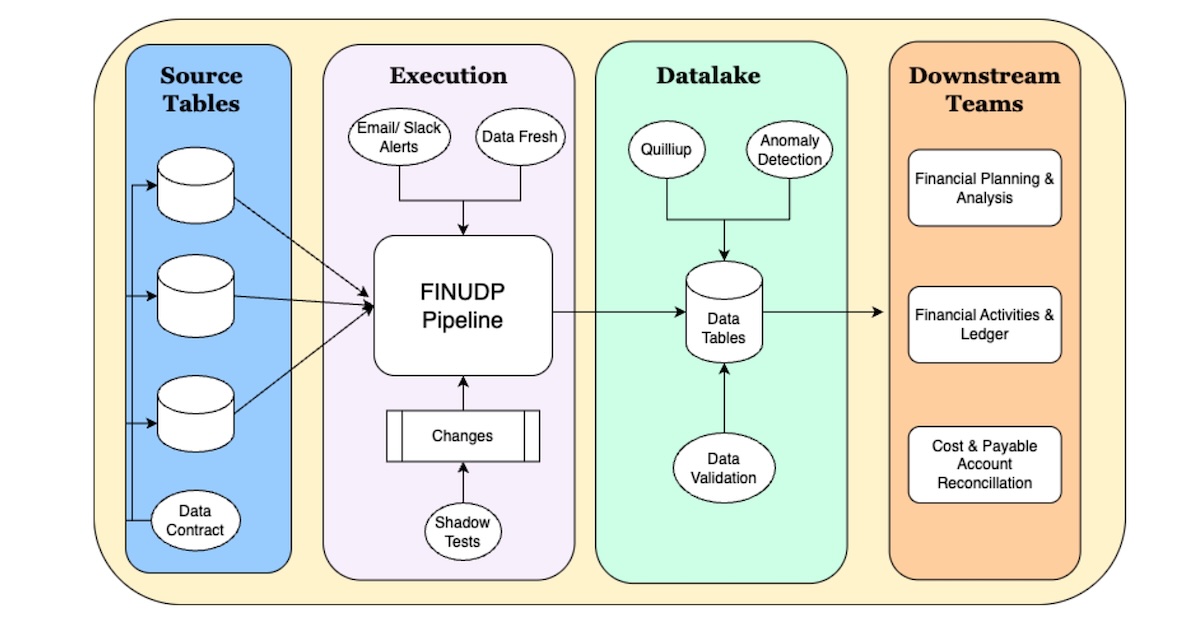
📖 Source: How Agoda Unified Multiple Data Pipelines Into a Single Source of Truth
Related Articles
Comments (0)
No comments yet. Be the first to comment!