
Uber Eats' WebView Leap: Faster Iteration Unlocked

Alps Wang
Aug 14, 2026 · 1 views
Bridging Native and Web at Scale
Uber Eats' migration to a native-driven, single-page WebView architecture for its feeds is a compelling case study for overcoming the inherent limitations of traditional native mobile development. The primary driver, bypassing rigid app store release cycles and achieving faster iteration, resonates deeply with development teams struggling with slow deployment pipelines. The detailed explanation of rebuilding core components like authentication and message bridging highlights the significant engineering effort required to achieve a seamless user experience, moving beyond the 'just throw a WebView in' approach. The move acknowledges the maturity of web technologies and the desire to leverage them for greater flexibility and control, especially in managing cross-platform state and complex UI logic. This approach is particularly noteworthy for its ambition to unify development efforts across native apps and web properties, reducing redundancy and enabling faster feature parity.
However, the success hinges on meticulous engineering and a robust infrastructure. The presentation hints at the complexity of managing cross-platform state, the intricate native-web message bridges, and the potential for degraded metrics if not executed perfectly. While the goal is faster iteration, the initial investment in building these core components and the ongoing maintenance of this hybrid architecture could be substantial. Furthermore, the inherent limitations of WebViews, such as performance nuances and potential for a less 'native' feel if not carefully managed, remain a concern. The success metrics and the long-term impact on user experience and development velocity will be crucial to observe as this architecture evolves. The strategy also implicitly suggests a shift in team skillsets, potentially requiring more expertise in web technologies within traditionally native mobile teams.
This migration is highly beneficial for large organizations like Uber Eats that operate multiple platforms (iOS, Android, Web) and face intense pressure to innovate rapidly. Engineering leaders and software architects tasked with improving development velocity, reducing release bottlenecks, and managing complex, cross-platform UIs will find immense value in understanding Uber's approach. Developers working on similar challenges, particularly those managing large codebases and aiming for feature parity across different client applications, can draw practical lessons from the solutions implemented for authentication, state management, and bridging. The presentation serves as a strong argument for reconsidering the traditional dichotomy between native and web development in mobile applications, advocating for a more integrated and flexible approach.
Key Points
- Uber Eats migrated its feeds from traditional native screens to a native-driven, single-page WebView architecture.
- Key motivations include bypassing app store release cycles for faster iteration and regaining control over the release process.
- The migration involved building robust native-web message bridges and addressing complex cross-platform state management.
- Core components like seamless authentication and native loading splash screens were rebuilt to ensure a native-like user experience.
- The strategy aims to unify development efforts across native apps and the web, reducing redundancy and improving feature parity.
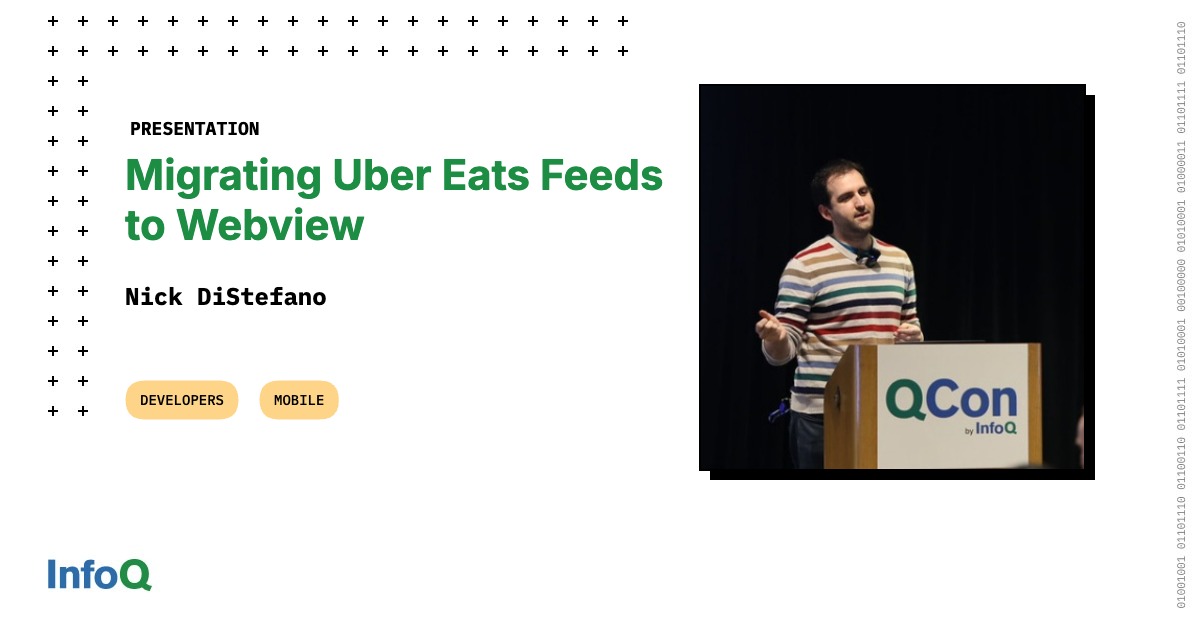
📖 Source: Presentation: Migrating Uber Eats Feeds to Webview
Related Articles
Comments (0)
No comments yet. Be the first to comment!