
Uber & Auth0: Reimagining AI Agent Access Control

Alps Wang
Jun 18, 2026 · 1 views
Bridging the Gap: Agent Identity in Complex Workflows
The article presents a compelling case for a new paradigm in AI agent access control, moving beyond traditional user or service account models. Uber's implementation, with its Agent Registry, Security Token Service issuing short-lived, single-hop JWTs, and the concept of an 'actor chain,' offers a robust solution for preserving context and provenance in multi-agent systems. The emphasis on delegated authority, scoped credentials, and explicit human approval boundaries, as advocated by Auth0, is crucial for mitigating risks associated with autonomous AI. The article effectively highlights how this approach addresses the inherent limitations of AI agents, which don't fit neatly into existing access control frameworks due to their multi-step, delegating, and non-deterministic nature.
However, a potential limitation lies in the complexity introduced by such granular per-hop token exchange and actor chain propagation. While Uber reports low P99 latency for their Security Token Service, scaling this across extremely large and complex agentic systems with potentially thousands of rapid tool calls per second could still present performance bottlenecks or operational overhead. The developer experience focus, with a standardized A2A client, is a positive step, but ensuring widespread adoption and correct implementation across diverse agent teams remains a challenge. Furthermore, the article touches upon IETF standards activity, but the maturity and widespread adoption of these emerging standards for AI agent authentication and authorization are still developing, potentially leading to interoperability challenges in the near term.
Key Points
- AI agents require a new access control paradigm beyond traditional human users or service accounts due to their autonomous, multi-step, and delegating nature.
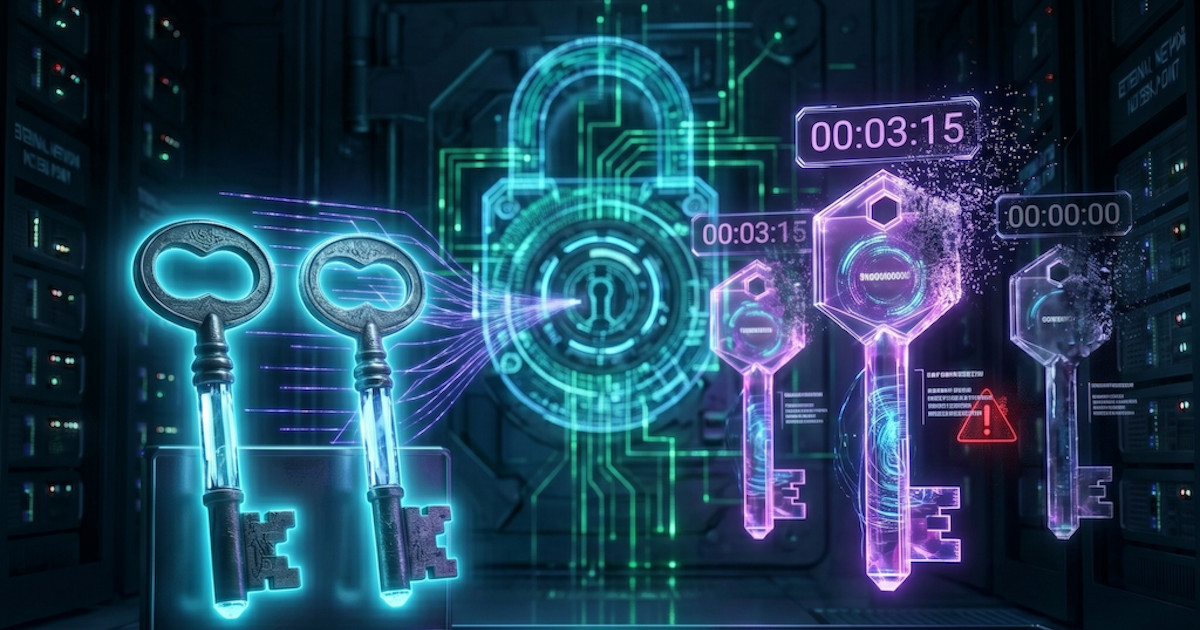
- Uber's architecture uses a Security Token Service to issue short-lived, single-hop JWTs for each agent interaction, preserving originating user context and agent provenance via an 'actor chain'.
- Auth0 advocates for permission models based on delegated authority, scoped credentials, and explicit human approval boundaries to limit agent risk.
- Key components of Uber's solution include an Agent Registry, Security Token Service, and an MCP Gateway for enforcing policies and data redaction.
- The approach aims for a secure-by-default developer experience by standardizing token exchange and actor chain propagation.
- Low latency (P99 < 40ms) for token exchange is achieved, addressing performance concerns.
📖 Source: AI Agent Identity and Permission Challenges: How Uber and Auth0 Are Rethinking Access Control
Related Articles
Comments (0)
No comments yet. Be the first to comment!