
TorchTPU: PyTorch Goes Native on Google TPUs

Alps Wang
Oct 26, 2026 · 1 views
Bridging the PyTorch-TPU Divide
The announcement of TorchTPU marks a significant step towards hardware fungibility in the AI landscape, directly addressing the long-standing friction for PyTorch users wanting to leverage Google's TPUs. The promise of a simple model.to('tpu') change, replacing the cumbersome PyTorch/XLA, is a major win for developer productivity and adoption. This move democratizes access to powerful AI accelerators beyond the dominant GPU ecosystem, aligning with the PyTorch Foundation's vision of running models on 'any chip in any cloud.' The open-sourcing of related tools like vLLM-TorchTPU and TorchTitan further solidifies this ecosystem, enabling scalable training and inference. The demonstrated near-linear scaling beyond 8,000 TPU chips is particularly impressive, suggesting TPUs are a viable contender for massive LLM workloads.
However, the article candidly acknowledges that the one-line change is merely a starting point for achieving peak performance. Optimizing models for TPUs will still require expertise in sharding, kernel operations, and understanding hardware-specific architectures, a nuance that might temper immediate 'out-of-the-box' performance expectations for cutting-edge models. While the introduction of the TPU agent suite aims to automate tuning, its effectiveness and maturity will be key. Furthermore, the comparison to AWS's TorchNeuron highlights a broader trend of vendor-specific optimization layers, even with unified PyTorch interfaces. The practical availability and cost of TPUs for on-premises deployments also remain a consideration for some organizations, as evidenced by the Hacker News comments. Despite these challenges, the overall impact of TorchTPU is undeniably positive, lowering the barrier to entry for TPU adoption and fostering greater competition and choice in the AI hardware market.
Key Points
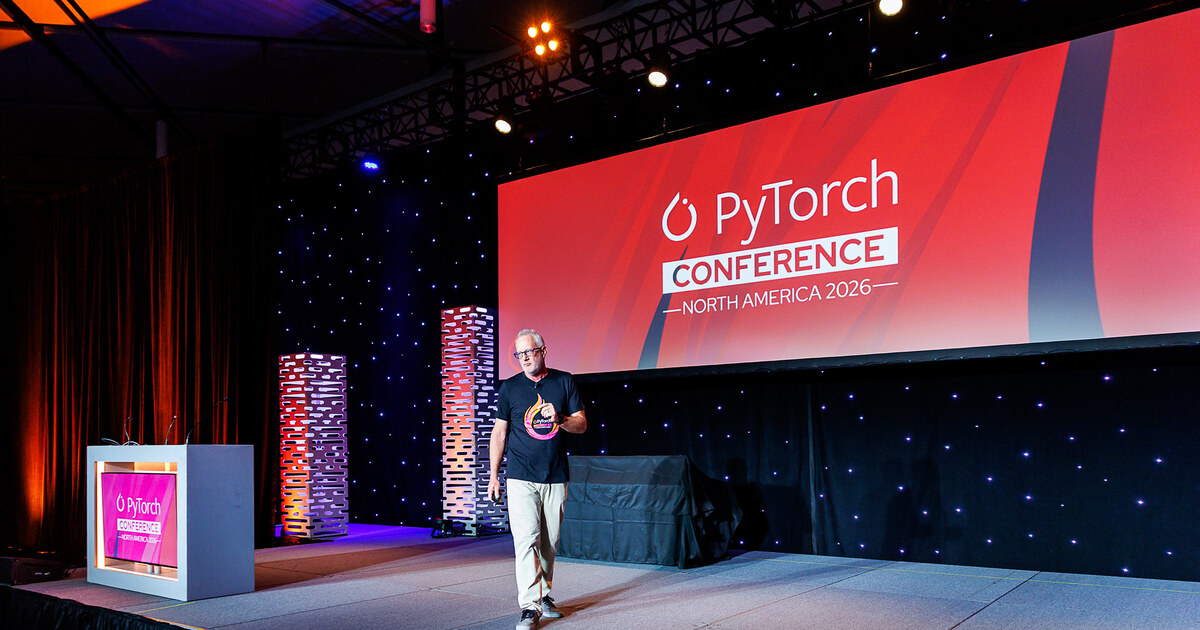
- Google and Meta open-sourced TorchTPU, a native PyTorch backend for Google's TPUs, at PyTorch Conference North America 2026.
- TorchTPU replaces PyTorch/XLA, simplifying model porting from GPUs to TPUs with a single line code change (
model.to('cuda')tomodel.to('tpu')). - This initiative aims to make TPUs a first-class, native PyTorch target, improving performance, reliability, and maintainability.
- The release includes open-sourced repositories for TorchTPU, vLLM-TorchTPU, SGLang-TorchTPU, and TorchTitan, supporting scalable training and inference.
- Demonstrated near-linear scaling beyond 8,000 TPU chips highlights TPU's capability for large-scale LLM workloads.
- While offering ease of use, achieving peak TPU performance will still require model tuning for shapes, sharding, and ops.
- Google announced a TPU agent suite for automating onboarding, diagnostics, and performance tuning.
- AWS also launched TorchNeuron, a native PyTorch backend for its Trainium chips, indicating a trend towards hardware-agnostic AI development within PyTorch.
- The move fosters hardware fungibility, aligning with the PyTorch Foundation's goal of running models on any chip in any cloud.
📖 Source: PyTorch Conference 2026: Google and Meta Open-Source TorchTPU for Native PyTorch on TPUs
Related Articles
Comments (0)
No comments yet. Be the first to comment!