Self-Hosted Observability: Taming Telemetry at Scale

Alps Wang
Oct 28, 2026 · 1 views
Navigating the Self-Hosted Observability Labyrinth
Colin Douch's presentation, 'Wrangling Telemetry at Scale: A Guide to Self-Hosted Observability,' provides a pragmatic and experienced perspective on a critical yet often painful aspect of modern infrastructure management. The core message, while cautionary about the immense effort involved, is invaluable for organizations considering or already navigating the complexities of self-hosting observability. Douch effectively highlights the 'complexity demon' that drives both the need for observability and the challenges of building and maintaining such systems. His emphasis on the interconnectedness of metrics, logs, and traces, and the importance of tooling that facilitates correlation (like Prometheus exemplars), is a key takeaway. The discussion on scaling Prometheus with solutions like VictoriaMetrics, Thanos, Mimir, and Cortex, along with the nuanced comparison of their strengths and weaknesses, offers practical guidance for engineers facing performance bottlenecks. The detailed breakdown of trade-offs, from engineering effort and cost to vendor lock-in avoidance, is the presentation's strongest suit, making it highly relevant for SREs, DevOps engineers, and engineering leaders.
However, the presentation, by its nature as a deep dive into self-hosting, inherently steers clear of the full spectrum of observability solutions. While Douch acknowledges the initial appeal of SaaS providers and the pain of their bills, the detailed exploration of alternatives is limited to open-source, self-hosted options. This leaves a gap for organizations that might find a hybrid approach or a different SaaS vendor a more suitable path. The technical depth, while appreciated, might also be overwhelming for those less familiar with the specific tools and concepts discussed. The presentation implicitly assumes a certain level of existing infrastructure and expertise, which might not be universally present. Furthermore, while Douch touches upon AI's potential role in complexity, the presentation doesn't deeply explore how AI itself might be a driver of telemetry volume or how AI-powered tools (both SaaS and potentially self-hosted) could further assist in managing this complexity, which is a missed opportunity given the context of ByteJourney.org. The focus remains firmly on traditional observability pillars and their self-hosted implementations.
Key Points
- Building and scaling self-hosted observability stacks involves significant engineering effort and cost, often requiring dedicated teams.
- The core of observability lies in correlating metrics, logs, and traces, not just storing data.
- Prometheus exemplars are crucial for stitching metrics to other telemetry types (logs, traces) enabling easier debugging.
- For scaling Prometheus, VictoriaMetrics offers superior efficiency and clustering, while long-term storage solutions like Thanos, Mimir, and Cortex address retention issues.
- Thanos's distributed query engine and Parquet storage engine offer potential advantages in highly distributed environments and query performance.
- Organizations should carefully weigh the trade-offs between vendor lock-in and the substantial investment required for self-hosting.
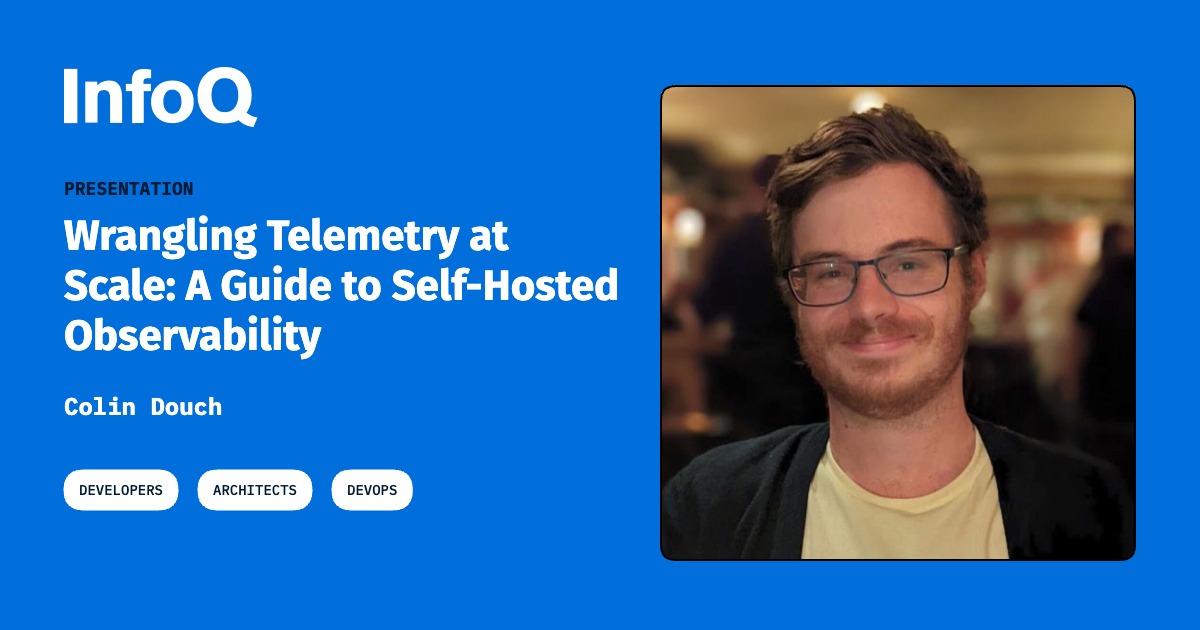
📖 Source: Presentation: Wrangling Telemetry at Scale: A Guide to Self-Hosted Observability
Related Articles
Comments (0)
No comments yet. Be the first to comment!