
Security & Architecture: The Unbreakable Bond

Alps Wang
Mar 28, 2026 · 1 views
The Betrayal Nexus
Shana Dacres-Lawrence's presentation provides a compelling framework for understanding the often-fraught relationship between security and architecture. The categorization of 'betrayal' into physical, emotional, and trust provides a novel lens through which to view systemic failures. The use of real-world examples like CrowdStrike and Change Healthcare effectively illustrates the devastating consequences when these two domains are not aligned. The five defense strategies – open communication, automation, tech integration, validation, and collaborative culture – offer practical guidance for organizations aiming to foster a more cohesive and secure environment. The emphasis on a 'zero trust household' and 'DevSecOps' integration highlights the contemporary imperative for a deeply embedded, proactive approach.
While the presentation is strong on conceptualization and practical advice, a deeper dive into the technical implementation of these strategies for specific architectural patterns or database technologies could further enhance its value for a technical audience. For instance, elaborating on how automation can be specifically applied to database security configurations or how validation processes can be integrated into CI/CD pipelines for data layers would be beneficial. The discussion on 'emotional betrayal' and 'assumed loyalty' is crucial but could benefit from more concrete examples of how to establish formal agreements or communication protocols that prevent such misunderstandings, especially in large, distributed teams. The presentation effectively argues that security and architecture are not separate entities but intertwined pillars, and failure in one inevitably weakens the other, leading to potentially catastrophic outcomes.
Key Points
- Security and architecture are deeply intertwined; betraying one leads to the destruction of both.
- Three types of betrayal exist: physical (structural weaknesses, delivery over security), emotional (assumed loyalty, misalignment), and trust (lack of transparency, broken promises).
- Real-world incidents like CrowdStrike and Change Healthcare highlight the severe consequences of neglecting this relationship.
- Five defense strategies are crucial: open communication, automation, tech integration, validation, and collaborative culture.
- Fostering a 'zero trust household' and embedding DevSecOps are essential for building resilient and secure systems.
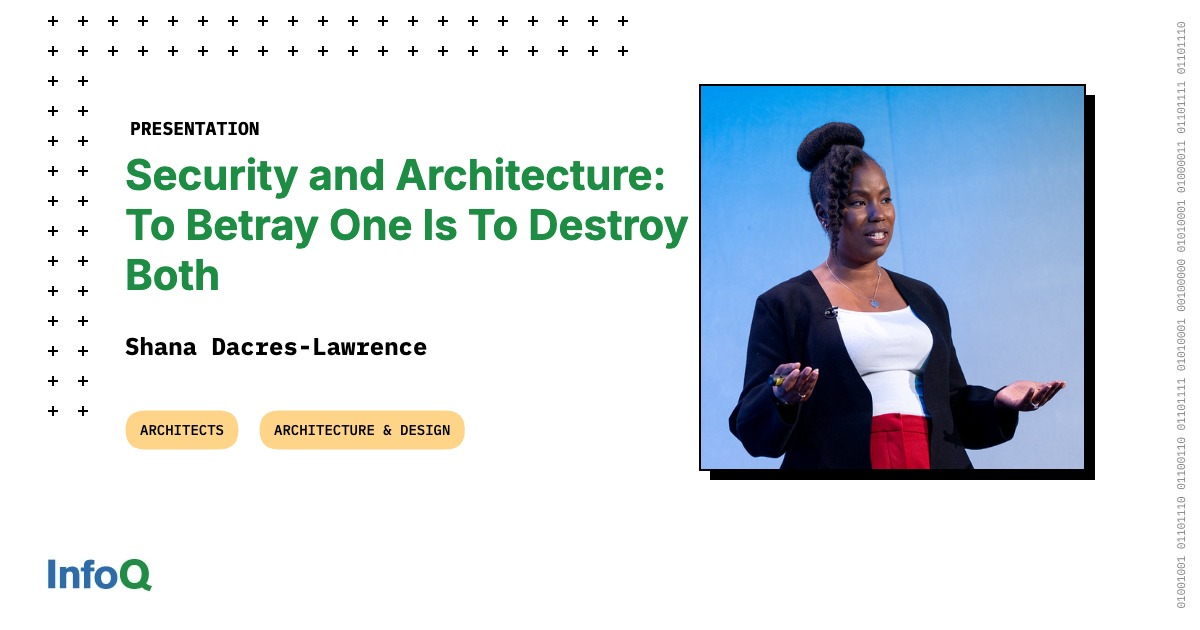
📖 Source: Presentation: Security and Architecture: To Betray One Is To Destroy Both
Related Articles
Comments (0)
No comments yet. Be the first to comment!