
OpenAI's Harness: AI Agents Code a Million Lines

Alps Wang
Feb 22, 2026 · 1 views
The Dawn of Agentic Software Engineering
OpenAI's Harness engineering represents a paradigm shift in software development, moving from manual coding to high-level intent specification and agent-driven execution. The core innovation lies in leveraging Codex agents to autonomously handle significant portions of the software lifecycle, including code generation, testing, bug fixing, and observability setup, all guided by declarative prompts and structured documentation. The internal experiment, producing a beta product with a million lines of code without manual source code writing, is a powerful testament to the potential of this approach. This methodology not only promises to accelerate development cycles but also allows human engineers to focus on higher-level problem-solving, research, and product strategy, rather than the minutiae of implementation.
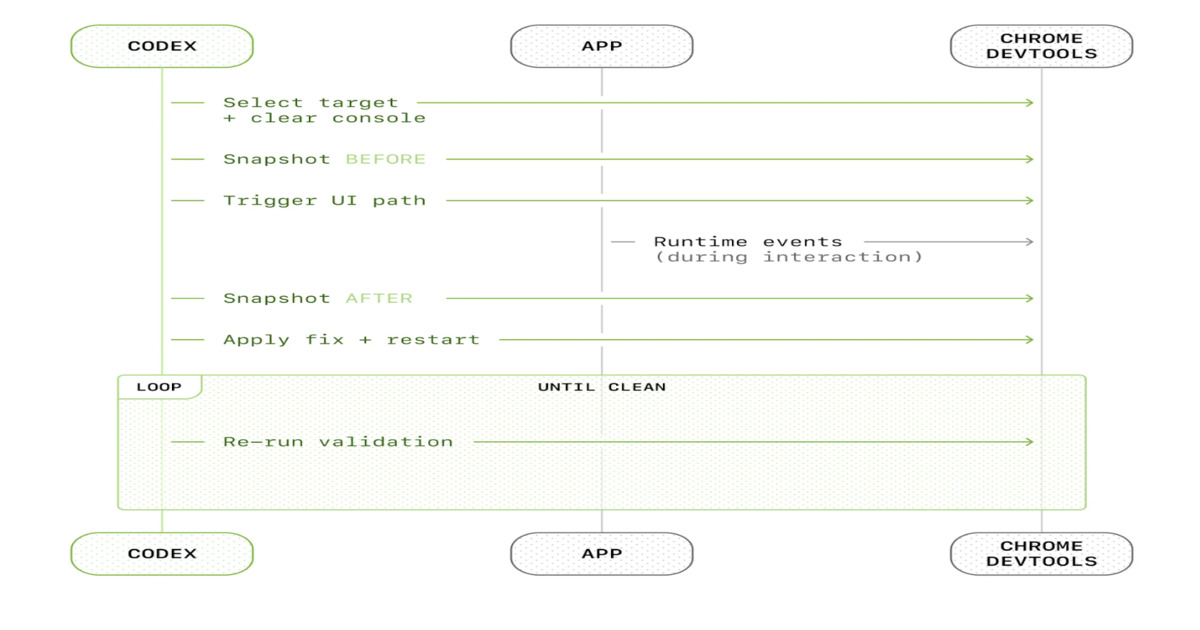
The system's reliance on structured, machine-readable artifacts like execution plans and design specifications as the 'single source of truth' is crucial. This mechanized enforcement of architectural boundaries and dependency layers, enforced by linters and CI validation, addresses common challenges in large-scale projects, such as maintaining code quality and preventing architectural drift. The explicit dependency flow (Types → Config → Repo → Service → Runtime → UI) provides a clear, enforceable framework. This approach is particularly noteworthy for its integration of observability and telemetry directly into the agent's workflow, enabling them to monitor performance, reproduce bugs, and iterate on fixes based on real-world application behavior. This tight feedback loop is essential for robust AI-driven development.
However, several limitations and concerns warrant consideration. The success of Harness engineering is heavily dependent on the quality and clarity of the initial prompts and the underlying Codex agents' capabilities. As LLMs evolve, the sophistication of these agents will undoubtedly increase, but current limitations in reasoning, error handling, and understanding complex, nuanced requirements might still pose challenges for highly novel or abstract problems. The reliance on a single, albeit powerful, AI suite (Codex) also introduces a potential single point of failure or vendor lock-in concern. Furthermore, the transition to this model requires a significant shift in engineering culture and skillsets, moving from direct coding to prompt engineering, system design, and meta-level oversight. The article doesn't extensively detail the human oversight mechanism beyond 'guided agents through pull requests and continuous integration workflows,' leaving room for questions about the balance between agent autonomy and human control, especially in critical decision-making processes. The cost and computational resources required to run such agent swarms at scale also remain an open question.
Key Points
- OpenAI has introduced Harness engineering, an internal methodology using AI agents (Codex) to automate key software development lifecycle tasks.
- Codex agents can write code, generate tests, manage observability, and fix bugs based on declarative prompts.
- An internal experiment resulted in a beta product with ~1 million lines of code, largely without manually written source code.
- Engineers shift focus from implementation to designing environments, specifying intent, and providing feedback.
- Harness standardizes workflows, reduces reliance on custom tooling, and enforces architectural boundaries mechanically.
- Agents use telemetry (logs, metrics, spans) to monitor performance and reproduce bugs.
- Structured documentation acts as the single source of truth for agents, with mechanical enforcement of architectural constraints.
📖 Source: OpenAI Introduces Harness Engineering: Codex Agents Power Large‑Scale Software Development
Related Articles
Comments (0)
No comments yet. Be the first to comment!