
OpenAI's Codex: Unified Agent Interfaces Unveiled

Alps Wang
Feb 18, 2026 · 1 views
Codex App Server: Deeper Dive
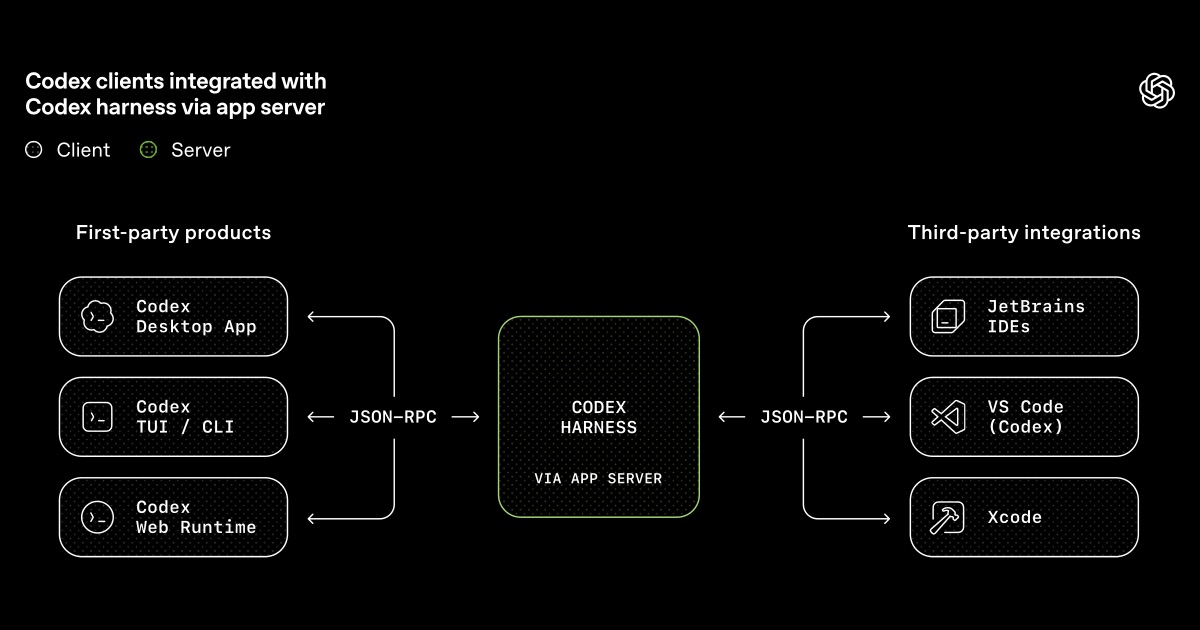
The publication of the Codex App Server architecture by OpenAI is a significant step forward in streamlining the interaction between AI agents and developer tools. The move to a bidirectional protocol with structured conversation primitives (Items, Turns, and Threads) addresses a crucial challenge in representing the complex, multi-stage nature of agent interactions, which goes beyond simple request-response exchanges. The design choices, including the rejection of MCP in favor of a custom solution, highlight the specific requirements of IDE integration, such as streaming diffs and approval flows. This architecture allows for more sophisticated and user-friendly experiences across various client surfaces. The open-sourcing of the Codex CLI repository is also a positive move, enabling developers to inspect the architecture and contribute to its evolution. Furthermore, the discussion of deployment patterns (local, partner, and web-based) demonstrates a pragmatic approach to supporting diverse integration scenarios. However, the article primarily focuses on the technical aspects and doesn't delve deeply into performance considerations, scalability limitations, or potential security vulnerabilities. A more comprehensive analysis of these aspects would have been beneficial.
While the article highlights the move towards standardization, it also acknowledges the nascent stage of agent-editor communication. The comparison with the Agent Client Protocol (ACP) provides valuable context, showing the industry's ongoing exploration of the optimal abstraction boundaries. This competitive landscape may lead to fragmentation or, ideally, to cross-pollination of ideas and the emergence of more robust and versatile solutions. The backward compatibility of the App Server is a positive design choice. The lack of detailed performance metrics or benchmarks is a minor limitation. The article could also benefit from a discussion on how the architecture handles concurrency and error handling, especially in the context of long-running agent tasks and potential network failures. The focus is primarily on the technical aspects of the architecture, so it would have been helpful to know more about the operational aspects, such as monitoring, logging, and debugging. The article could also benefit from a discussion on security considerations, especially in the context of long-running agent tasks and potential network failures.
Key Points
- The Codex App Server decouples the agent's core logic from its client surfaces, providing a unified API for various interfaces (CLI, VS Code, web, etc.).
- The architecture utilizes conversation primitives (Items, Turns, Threads) to model the structured nature of agent interactions.
- OpenAI rejected the Model Context Protocol (MCP) in favor of a custom solution for better IDE integration.
- The protocol uses JSON-RPC streamed as JSONL over stdio and is designed for backward compatibility.
- The article describes three deployment patterns: local, partner, and web-based.
- The App Server's evolution aligns with broader industry efforts to standardize agent-editor communication, such as the Agent Client Protocol (ACP).
📖 Source: OpenAI Publishes Codex App Server Architecture for Unifying AI Agent Surfaces
Related Articles
Comments (0)
No comments yet. Be the first to comment!