
OpenAI's Codex: Secure Windows Agent Sandbox

Alps Wang
Jun 6, 2026 · 1 views
Securing the Agentic Era on Windows
OpenAI's detailed explanation of their custom Windows sandbox for Codex agents is a crucial step forward in making powerful AI coding tools more accessible and trustworthy for developers. The core innovation lies in their pragmatic approach to combining existing Windows security primitives (SIDs, ACLs, restricted tokens) to create a layered defense that balances isolation with the operational needs of autonomous agents. This is particularly noteworthy because it acknowledges the limitations of off-the-shelf solutions like Windows Sandbox, which are too restrictive for direct integration with a developer's live environment. The evolution from the 'unelevated sandbox' to the 'elevated sandbox' with dedicated local accounts demonstrates a thoughtful, iterative design process focused on robustness and security.
The implications of this work extend beyond just Codex. As AI agents become more sophisticated and integrated into daily workflows, the need for secure execution environments will only grow. OpenAI's solution provides a blueprint for how other AI vendors can tackle similar challenges on Windows, a platform where granular security controls can be complex to implement. The emphasis on preserving developer productivity by minimizing interruptions and allowing necessary access to tools and repositories is a key takeaway. However, the inherent complexity of maintaining such custom security mechanisms could be a concern for widespread adoption and long-term support. Ensuring that these sandboxes are easily configurable, auditable, and resilient to future Windows updates will be critical for their sustained success. The article highlights a necessary engineering trade-off: achieving robust security for agentic workloads on Windows requires bespoke solutions rather than relying solely on generic OS features.
Key Points
- OpenAI developed a custom Windows sandbox for its Codex coding agent due to limitations of existing OS isolation mechanisms.
- The sandbox balances security, usability, and developer productivity by restricting agent access while minimizing workflow interruptions.
- Key techniques include combining Windows Security Identifiers (SIDs), Access Control Lists (ACLs), and restricted tokens.
- The evolution to an 'elevated sandbox' uses dedicated local Windows accounts and firewall rules for enhanced control.
- This approach addresses the unique needs of autonomous coding agents, which require access to development environments and resources.
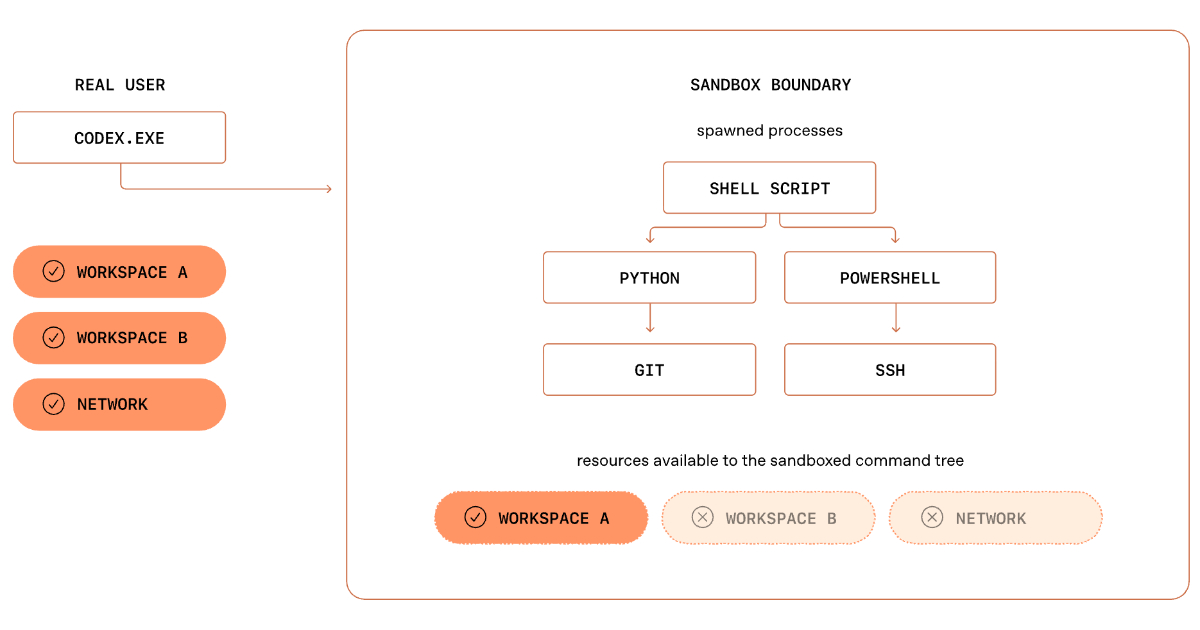
📖 Source: How OpenAI Built a Secure Windows Sandbox for Codex Agents
Related Articles
Comments (0)
No comments yet. Be the first to comment!