
Netflix's Container Scaling Secret: CPU Architecture Matters

Alps Wang
Mar 1, 2026 · 1 views
The Hardware-Software Interplay
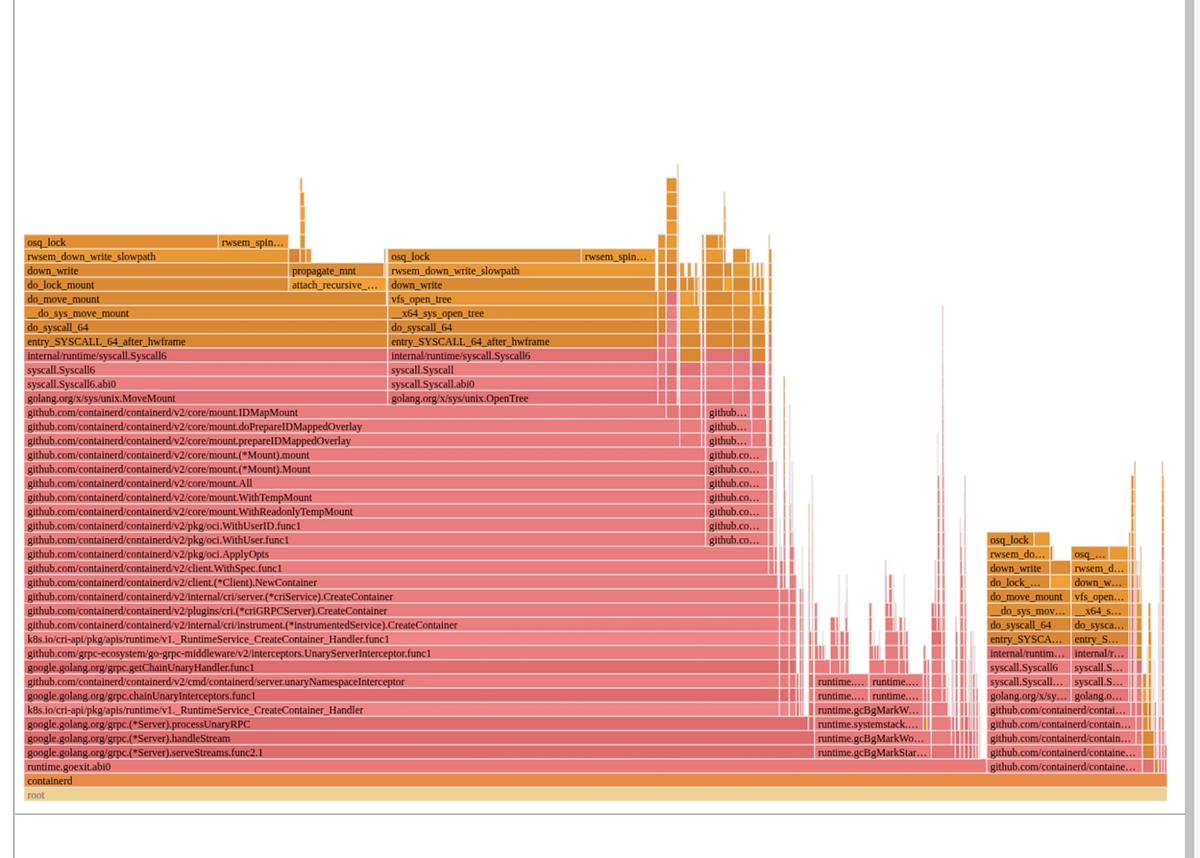
Netflix's detailed account of their container scaling challenges, particularly the mount lock contention exacerbated by modern CPU architectures, is a compelling case study for anyone operating at cloud scale. The team's methodical approach, from observing the symptoms to deep-diving into performance metrics and CPU microarchitecture, is commendable. The insights into how NUMA, hyperthreading, and centralized vs. distributed cache designs directly impact the performance of global kernel locks like those in the VFS are particularly illuminating. The identification of the path_init() lock contention as the root cause and the subsequent software optimization by leveraging newer kernel APIs to reduce mount operations is a significant achievement, demonstrating proactive problem-solving and upstream collaboration.
However, while the article effectively showcases the problem and its solution, it primarily focuses on the 'what' and 'how' of the issue and its resolution. A deeper exploration of the 'why' behind the specific choice of r5.metal instances for this particular workload, or the trade-offs considered before migrating to a new container runtime that introduced this problem, could have added further strategic context. Furthermore, while the software solution is elegant, the reliance on newer kernel versions for fsconfig()'s lowerdir+ support might pose adoption challenges for users on older kernel distributions, necessitating careful consideration of kernel upgrade strategies. The article also doesn't extensively detail the cost implications or the operational complexity introduced by managing these hardware-specific performance nuances across a large fleet.
Key Points
- Modern CPU architectures and their microarchitectural differences (NUMA, cache design, hyperthreading) can introduce significant performance bottlenecks for container runtimes, especially under high concurrency.
- Mount lock contention in the Linux kernel's VFS is a critical bottleneck when launching many container layers, particularly when using user namespaces with idmap for security.
- r5.metal instances, with their dual-socket NUMA design and centralized cache architecture, were more susceptible to mount lock contention compared to newer single-socket, distributed cache architectures like m7a.
- Hyperthreading can exacerbate lock contention by causing logical CPUs to compete for shared execution resources.
- Software optimizations, such as using newer kernel mount APIs (
fsconfig()) to supply idmap'ed lowerdirs as file descriptors and mapping common parent directories, can drastically reduce mount operations and mitigate contention. - Hardware-software co-design and deep performance analysis are crucial for achieving efficient scaling at the scale Netflix operates.
📖 Source: Mount Mayhem at Netflix: Scaling Containers on Modern CPUs
Related Articles
Comments (0)
No comments yet. Be the first to comment!