
MCP Enterprise Auth Goes Stable: Bye Bye Consent Prompts

Alps Wang
Jul 6, 2026 · 1 views
Streamlining Enterprise AI Connectivity
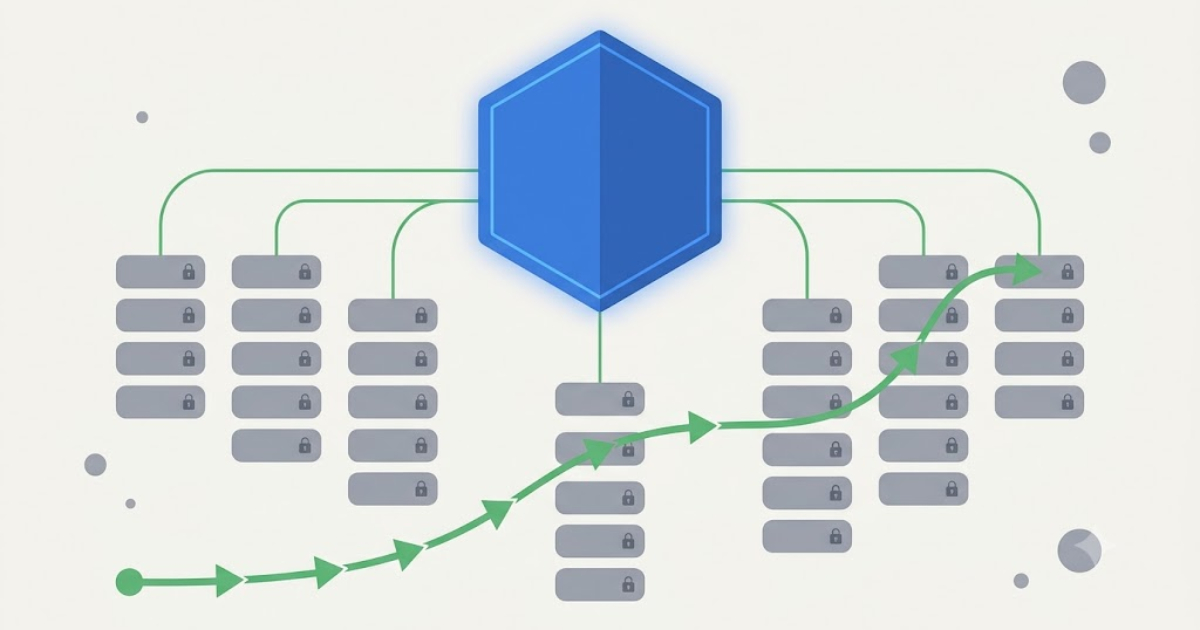
The promotion of the Enterprise-Managed Authorisation (EMA) extension to stable status by the Model Context Protocol (MCP) team is a crucial step towards broader enterprise adoption of AI agents and tools. The core innovation lies in shifting authorization from a user-per-server model to a centralized, identity-provider-driven approach. This directly tackles the 'mess' of repeated consent prompts, which is a significant operational burden and a security concern for large organizations. By leveraging existing identity infrastructure like Okta's Cross App Access, EMA promises a 'single sign-on' experience, reducing friction for users and enabling administrators to enforce policies more effectively. The separation of connection-level authorization from runtime action control is a well-architected design choice, acknowledging that while EMA simplifies access, organizations still need to manage granular permissions within their systems. This approach respects the principle of least privilege and maintains a clear boundary between authentication and authorization for specific actions.
However, the reliance on both the identity provider and the MCP server supporting the EMA extension means that adoption will be gradual and dependent on ecosystem development. While the list of supporting partners is growing, organizations without compatible identity providers will still require fallback mechanisms. Furthermore, the article explicitly states this is not runtime authorization for individual actions. This is a critical limitation that enterprises must understand; EMA secures the connection, but doesn't govern what an agent does once it's inside a system. Organizations will still need robust internal security controls and monitoring for agent behavior. The success of EMA will hinge on the continued expansion of its ecosystem and clear communication regarding its scope and limitations to enterprise security teams.
Key Points
- Model Context Protocol (MCP) has released its Enterprise-Managed Authorisation (EMA) extension to stable status.
- EMA provides a centralized way for organizations to control access to MCP servers via their identity provider, replacing per-server consent prompts.
- This aims to offer a 'single sign-on' experience for users, inheriting access to approved servers.
- The flow uses an Identity Assertion JWT Authorisation Grant (ID-JAG) exchanged for an access token.
- EMA separates identity policy from the tool call itself, focusing on connection-level control, not runtime authorization for individual actions.
- Key adopters and supporters include Anthropic, Microsoft, Okta, and a growing list of MCP servers and clients like Visual Studio Code.
📖 Source: AI Model Context Protocol Adds Centralised Auth for Enterprise
Related Articles
Comments (0)
No comments yet. Be the first to comment!