
Grab's AI Agents Supercharge Engineering Support

Alps Wang
May 21, 2026 · 1 views
Agent-Based Engineering Automation Unveiled
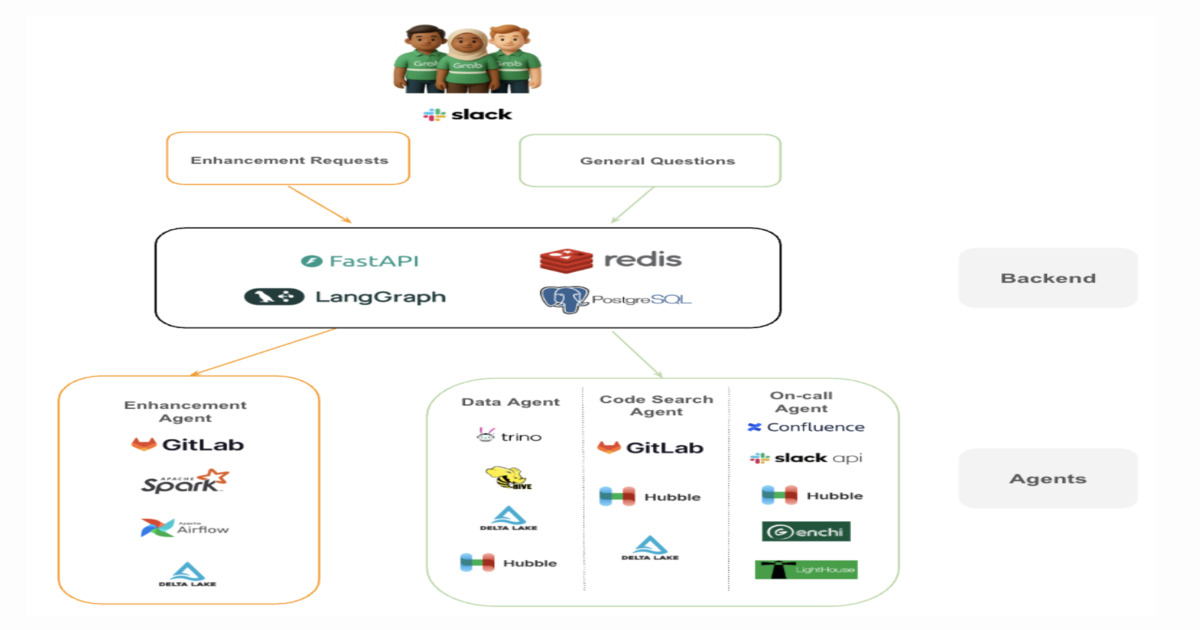
Grab's implementation of a multi-agent AI system for engineering support at scale presents a compelling case study in leveraging AI to optimize operational efficiency and reallocate valuable engineering resources. The clear separation into 'investigation' and 'enhancement' workflows is a particularly strong architectural choice, significantly reducing complexity and enhancing reliability. The consolidation of the tool ecosystem, moving from over 30 to a curated set, is a practical lesson in managing the intricacies of agent interactions and ensuring predictability. The emphasis on safety and governance, including constrained SQL execution and human-in-the-loop review for code changes, demonstrates a mature approach to deploying AI in critical production environments. Furthermore, the acknowledgement of context management as a significant challenge and the proposed solutions through structured compression and selective retrieval are highly relevant to current LLM-based agent development.
However, while the article highlights the reclaimed engineering hours and a shift towards higher-value work, it lacks concrete quantitative metrics on performance improvements, such as Mean Time To Resolution (MTTR) for common issues or the percentage of tasks fully automated. This would significantly bolster the case for adoption. The reliance on LangGraph, while powerful, might present a learning curve for teams not already familiar with its specific paradigm. The article also doesn't deeply explore the potential for agent collusion or emergent undesirable behaviors, a common concern in complex multi-agent systems, though the constrained responsibilities and human oversight mitigate this to some extent. The long-term maintainability and scalability of the curated toolset, especially as the platform evolves, will also be a continuous challenge.
Key Points
- Grab implemented a multi-agent AI system to automate repetitive engineering support tasks on its large-scale data platform.
- The system separates requests into 'investigation' (diagnostics) and 'enhancement' (actionable outputs) workflows.
- LangGraph is used as the workflow engine, orchestrated with FastAPI services.
- A key decision was consolidating over 30 internal tools into a smaller, curated set for better maintainability and predictability.
- Safety and governance are integrated, with constrained SQL execution and human-in-the-loop review for code changes.
- Context management is a significant challenge addressed through structured compression and selective retrieval.
- The system aims to shift engineers from reactive firefighting to higher-value platform improvement work.
📖 Source: Designing a Multi-Agent System for Engineering Support at Scale: A Case Study From Grab
Related Articles
Comments (0)
No comments yet. Be the first to comment!