
Gemini Powers Google I/O 2026: AI in Action

Alps Wang
Jun 2, 2026 · 1 views
AI's Creative Renaissance at I/O
The Google Gemini Blog post, 'How we used Gemini to build Google I/O 2026,' offers a compelling glimpse into the practical integration of advanced AI tools in a large-scale event. The article effectively details how Gemini and associated models like Nano Banana were leveraged across various facets of I/O, from film production and visual branding to immersive experiences and personalized merchandise. The emphasis on blending human artistry with AI, and how AI offloads mundane tasks to free up human creativity, is a crucial takeaway. The detailed breakdown of specific AI products and models used, along with illustrative prompts, provides valuable insight for developers and technologists interested in generative AI applications. The success in accelerating prototyping, enhancing creative output, and delivering unique attendee experiences highlights the maturity and potential of these AI technologies.
However, the article leans heavily on showcasing the success and innovation without deeply exploring potential limitations or challenges encountered during this ambitious implementation. While it mentions 'experimental' models and 'prototyping in real-time,' the inherent risks and complexities of relying on cutting-edge, potentially unstable AI for a live, high-stakes event are not elaborated upon. For instance, the consistency and control of AI-generated content, especially under pressure, could be a significant concern. Furthermore, the article could benefit from a more robust discussion on the ethical considerations, data privacy implications, and the computational resources required for such extensive AI utilization. The 'reward' of viewers not noticing AI's presence is a testament to seamless integration, but understanding the underlying infrastructure and potential failure points would add another layer of critical analysis. The focus on 'what people can really do with AI' is well-served by the examples, but a deeper dive into the 'how' concerning rigorous testing, quality assurance, and fallback mechanisms would be beneficial for a comprehensive understanding.
Key Points
- Google I/O 2026 leveraged its own Gemini AI models and related tools (Nano Banana, Gemini Omni, etc.) to build various aspects of the event.
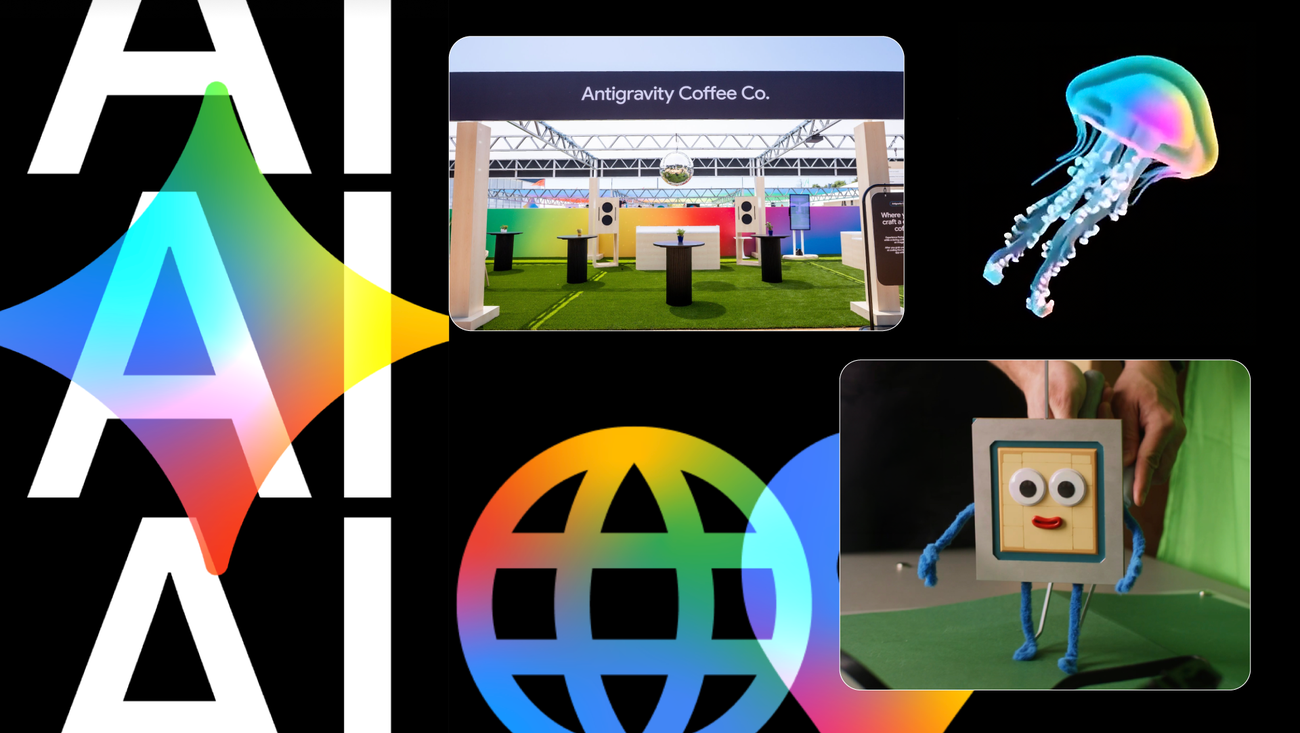
- AI was used to accelerate content creation, from a short film ('TPU Training Day') and visual branding to immersive pre-show experiences and personalized merchandise.
- The integration focused on blending human artistry with AI, with AI handling mundane tasks and enabling faster prototyping and iteration.
- Specific AI applications included generative film production, AI-assisted visual brand identity development, real-time music generation from sensor data, dynamic video game level generation, adaptive UI for custom ordering, personalized speaker title cards, and on-demand sticker design.
- The article highlights the iterative process of using AI, including feeding outputs back into models and using custom tools for consistency and scale.
- The goal was to demonstrate AI's practical helpfulness and unlock new levels of creativity and efficiency for the event production team.
Related Articles
Comments (0)
No comments yet. Be the first to comment!