
Elasticsearch Outage: Lifelong SRE Lessons

Alps Wang
Apr 29, 2026 · 1 views
The Cost of Unpreparedness
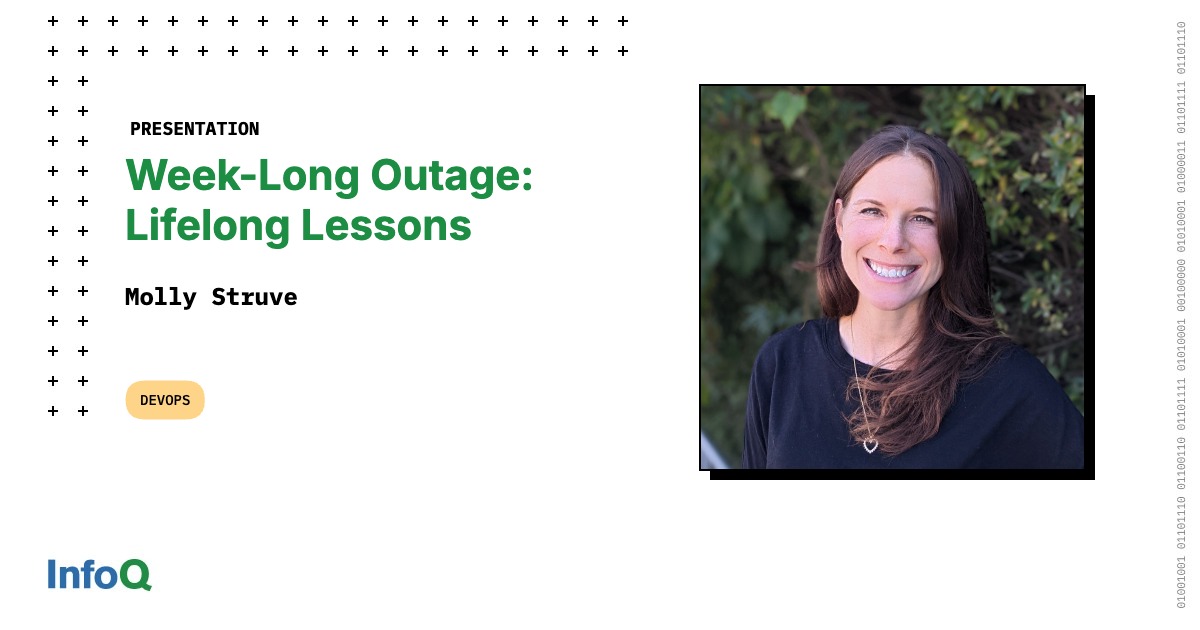
Molly Struve's presentation on the six-day Elasticsearch outage at Kenna Security offers a compelling narrative of a near-catastrophic incident and the invaluable lessons learned. The core technical takeaways, such as the critical importance of Failure Mode and Effects Analysis (FMEA) and the necessity of regularly exercising rollback mechanisms, are paramount for any organization managing complex, data-intensive systems. The detailed account of the Elasticsearch upgrade from version 2 to 5, and the subsequent CPU/load spikes leading to cluster crashes, highlights a common pitfall in major version upgrades: underestimating the impact of underlying system changes on application performance and stability. The reliance on external support from Elastic, while ultimately successful, underscores the challenge of debugging novel issues in critical infrastructure components without deep internal expertise or robust internal testing procedures.
The human elements discussed – widening the circle early and having a VP act as a defender – are equally crucial. In high-stress incidents, clear communication, psychological safety, and executive support can significantly impact team performance and decision-making. The narrative effectively illustrates that technical solutions are only part of the equation; effective incident response also hinges on strong team dynamics and leadership. However, a limitation could be the lack of explicit details on the specific bug in Elasticsearch that caused the issue and the exact nature of the workaround, which might have provided even more granular technical insights for developers facing similar scenarios. While the presentation emphasizes the importance of rollback, it could benefit from more concrete examples of how to implement and test such plans for complex data layers, especially in distributed systems.
This presentation is highly beneficial for Site Reliability Engineers (SREs), DevOps teams, system architects, and engineering managers who are responsible for maintaining the stability and performance of critical applications, particularly those heavily reliant on large-scale data stores like Elasticsearch. The lessons learned are universally applicable to any software development lifecycle that involves significant system changes or upgrades. The emphasis on proactive risk assessment through FMEA and rigorous testing of recovery procedures provides a strong framework for building more resilient systems. The story serves as a stark reminder that even seemingly straightforward upgrades can have profound and cascading effects, demanding a comprehensive approach to planning, testing, and incident management.
Key Points
- Major outages can be nearly company-ending, emphasizing the critical need for robust incident response and recovery plans.
- Failure Mode and Effects Analysis (FMEA) is crucial for proactively identifying and mitigating risks before major changes.
- Regularly exercising rollback mechanisms is non-negotiable; untested rollbacks are a significant risk.
- The human element in incident response (early communication, strong leadership support) is as vital as technical solutions.
- Underestimating the complexity of major software version upgrades, especially for core infrastructure like Elasticsearch, can lead to severe consequences.
- External dependency for critical bug fixes can prolong outages; building internal expertise is key.
Related Articles
Comments (0)
No comments yet. Be the first to comment!