
Dropbox's Clever Compaction: Reclaiming Space from Sparse Data

Alps Wang
Apr 30, 2026 · 1 views
Reclaiming Storage at Scale
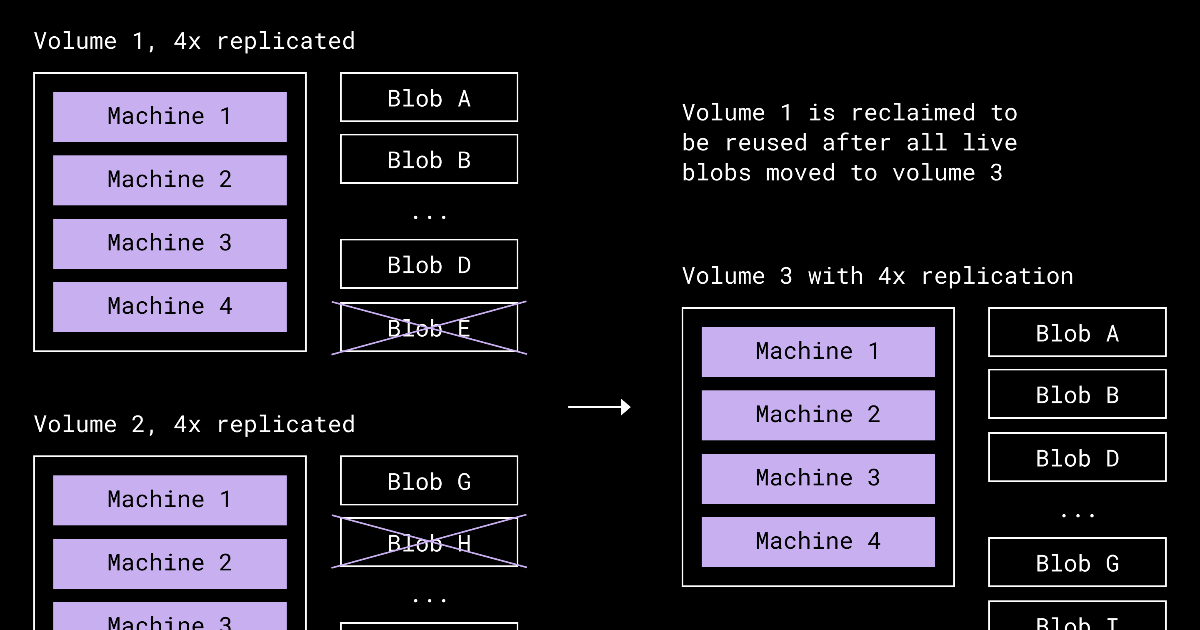
Dropbox's redesign of its compaction strategy for Magic Pocket, their exabyte-scale immutable blob store, is a compelling case study in managing the inherent inefficiencies of immutable data. The core challenge lies in the trade-off between data durability and space reclamation. By treating data as immutable, deletes don't immediately free up space, leading to fragmentation and wasted capacity over time. The introduction of the 'Live Coder' service, while beneficial for write amplification, exacerbated this problem by creating severely underfilled storage volumes, pushing the limits of their existing compaction system. The development of tiered compaction strategies (L2 and L3) demonstrates a nuanced approach to tackling different levels of underfilling, moving beyond a one-size-fits-all solution. L2 aims to consolidate sparse volumes into denser ones, while L3 targets extremely sparse volumes by streaming data through the Live Coder for gradual rewriting. This tiered approach is a significant innovation, acknowledging that different storage conditions require tailored reclamation methods.
The article highlights the practical realities of large-scale systems, where seemingly simple changes can have complex, unintended consequences. The discussion around user comments on Hacker News, questioning the 'unintended consequence' and the product's usability/pricing, is particularly insightful. It underscores the difficulty of predicting and managing system behavior at such a vast scale, and the iterative nature of engineering where deployment and observation are crucial for identifying and rectifying issues. The fact that this is an internal system, Magic Pocket, also means that the improvements, while significant for Dropbox's operational efficiency, are not directly visible to end-users in terms of product features or pricing adjustments, making the 'usability' critique somewhat misplaced in this context, but still relevant to the broader Dropbox product perception. The technical details provided, such as the concept of immutable blobs, write amplification, fragmentation, and erasure coding, offer valuable insights for anyone working with distributed storage systems.
Key Points
- Dropbox redesigned its compaction strategy for Magic Pocket, an exabyte-scale immutable blob store, to reclaim space from underfilled storage volumes.
- The immutability of data means deleted files don't immediately free up space, leading to fragmentation and wasted capacity over time.
- A new service, 'Live Coder', unintentionally increased data fragmentation by creating severely underfilled volumes (sometimes <5% capacity).
- Two new tiered compaction strategies, L2 and L3, were introduced: L2 consolidates sparse volumes, and L3 streams data from extremely sparse volumes for gradual rewriting.
- This tiered approach addresses different levels of underfilling more efficiently than the previous method.
- The article touches on the challenges of managing large-scale systems and the iterative nature of engineering discovery through deployment and observation.
📖 Source: Dropbox Redesigns Compaction to Reclaim Space from Underfilled Storage Volumes
Related Articles
Comments (0)
No comments yet. Be the first to comment!