
DoorDash's Global Dasher Onboarding: A Modular Revolution

Alps Wang
Mar 7, 2026 · 1 views
Architectural Evolution for Global Reach
DoorDash's re-architecture of its Dasher onboarding platform is a compelling case study in tackling global scalability and regional complexity through composability and modularity. The key insight lies in moving from a brittle, code-forked system to a declarative, configuration-driven workflow engine. This shift significantly reduces engineering overhead, accelerates new market launches, and ensures a consistent yet localized experience for Dashers. The adoption of a unified status map as a single source of truth for applicant progress is particularly noteworthy, simplifying state management, retries, and parallel execution, thereby mitigating operational risks. The emphasis on reusable step modules and clear data contracts highlights a mature approach to building maintainable and evolvable systems, a lesson many organizations struggle to implement effectively.
The platform's success in migrating existing markets with minimal disruption and no regressions is a testament to its robust design. The ability for independent teams to own and evolve modules autonomously, while adhering to shared interface contracts, fosters agility and innovation. This architecture is directly applicable to any large-scale organization grappling with international expansion and the complexities of localized business logic. The lessons learned – designing for scale early, reasoning from first principles, investing in reusability, and prioritizing backward compatibility – are invaluable for architects and engineering leaders aiming to build resilient and adaptable systems. The future enhancements like dynamic workflow configuration and staged rollouts further underscore the platform's forward-thinking design, positioning it for continued evolution.
Key Points
- DoorDash re-architected its Dasher onboarding system into a unified, modular workflow platform to accelerate global expansion and eliminate regional complexity.
- The new architecture replaced a fragmented legacy system with a composable, step-based orchestration model.
- Key benefits include faster new market launches, consistent onboarding experiences, and reduced engineering overhead.
- A unified status map serves as a single source of truth for applicant progress, simplifying state management and retries.
- The platform utilizes reusable step modules, enabling autonomous evolution by independent teams while adhering to shared interface contracts.
- Lessons learned emphasize designing for global scale early, reasoning from first principles, investing in reusable modules, and prioritizing backward compatibility.
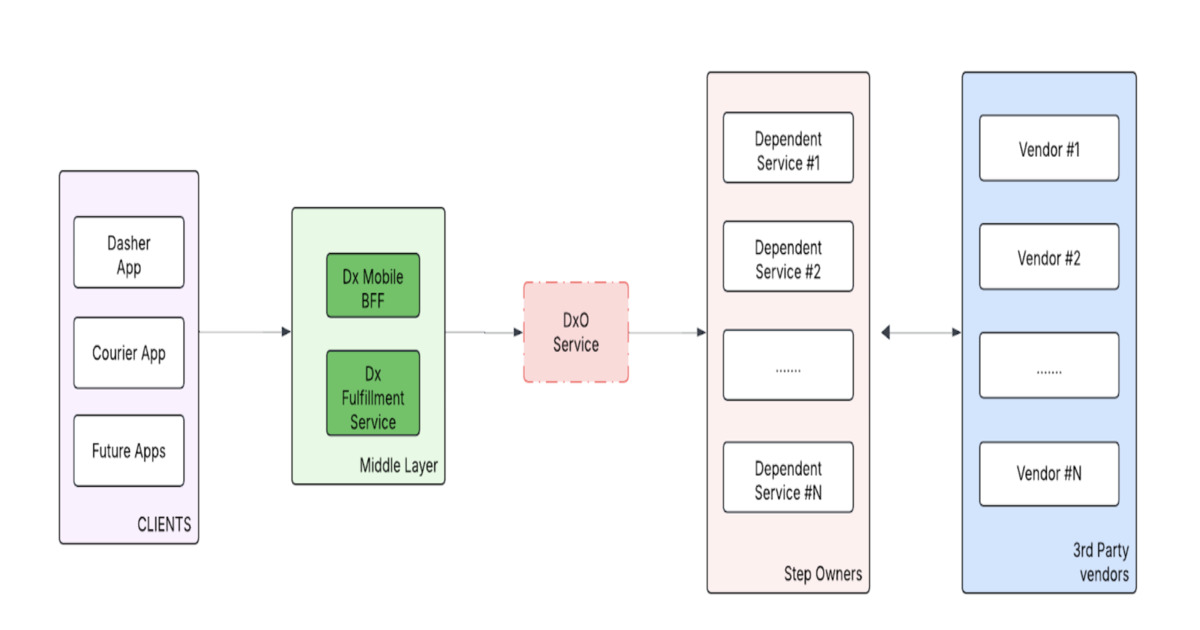
📖 Source: Architecting for Global Scale: Inside DoorDash’s Unified, Composable Dasher Onboarding Platform
Related Articles
Comments (0)
No comments yet. Be the first to comment!