
Developers: Code for Sustainability & Ethics

Alps Wang
Feb 3, 2026 · 1 views
Sustainable Code: A Developer's Duty
This podcast interview from InfoQ provides valuable insights into the intersection of software development and Environmental, Social, and Governance (ESG) considerations. The key takeaway is the concept of "ethical debt" and how developers can proactively address it by focusing on performance, sustainability, and ethical data practices. The discussion with Erica Pisani reveals the importance of measuring the environmental impact of software and the need for a more holistic approach that considers factors like energy consumption, data storage, and the ethical implications of AI models. The inclusion of speakers like Jade, focusing on smaller, more efficient AI models, and Sarah Hsu, emphasizing the importance of measurement, provides a practical framework for developers to implement sustainable practices. The podcast also effectively highlights the global impact of these issues, particularly the unequal distribution of resources and the need for inclusivity in AI development, as demonstrated by the conversation about AI bias and the benefits of local-first software.
One potential limitation is the podcast's focus on a specific conference track, which might limit the breadth of topics covered. While the guests offer valuable perspectives, the conversation could benefit from a deeper dive into the technical implementation details and the practical challenges developers face when adopting these sustainable practices. Furthermore, although the podcast touches upon the Green Software Foundation's work, it could have included more specific examples of tools and methodologies that developers can readily use. The discussion of local-first software is a great point, but more context about specific frameworks or libraries that support this development paradigm would be welcome. The discussion also benefits from a future-oriented perspective, highlighting the role of architecting for resilience in creating more sustainable systems. Overall, the podcast offers a compelling argument for sustainable software development and provides a valuable starting point for developers seeking to improve the ESG aspects of their work.
The podcast’s emphasis on a long-term perspective is crucial. The discussion of ethical debt and the need for conscious decision-making in the design phase is crucial. Addressing the environmental costs of software development, including the energy consumption of data centers, the bandwidth used for streaming, and the environmental impact of training large language models is relevant to all developers. It’s particularly beneficial for senior developers and architects, as they can more effectively influence the design and architecture of projects, and team leads who can better advocate for these practices within their teams. The podcast implicitly encourages a shift in mindset, from simply optimizing for performance to considering broader environmental and ethical implications, making it a valuable resource for anyone involved in software development.
Key Points
- Developers can improve the ESG impact of software by addressing 'ethical debt' through sustainable practices.
- Smaller, targeted AI models can be more performant and sustainable than larger models, especially when considering data acquisition ethics.
- Local-first software development principles enhance user experience, reduce energy consumption, and increase resilience.
- Measurement and metrics are crucial for tracking progress towards sustainable software goals.
- The podcast highlights the importance of considering the global impact of software, including issues of bias and resource distribution.
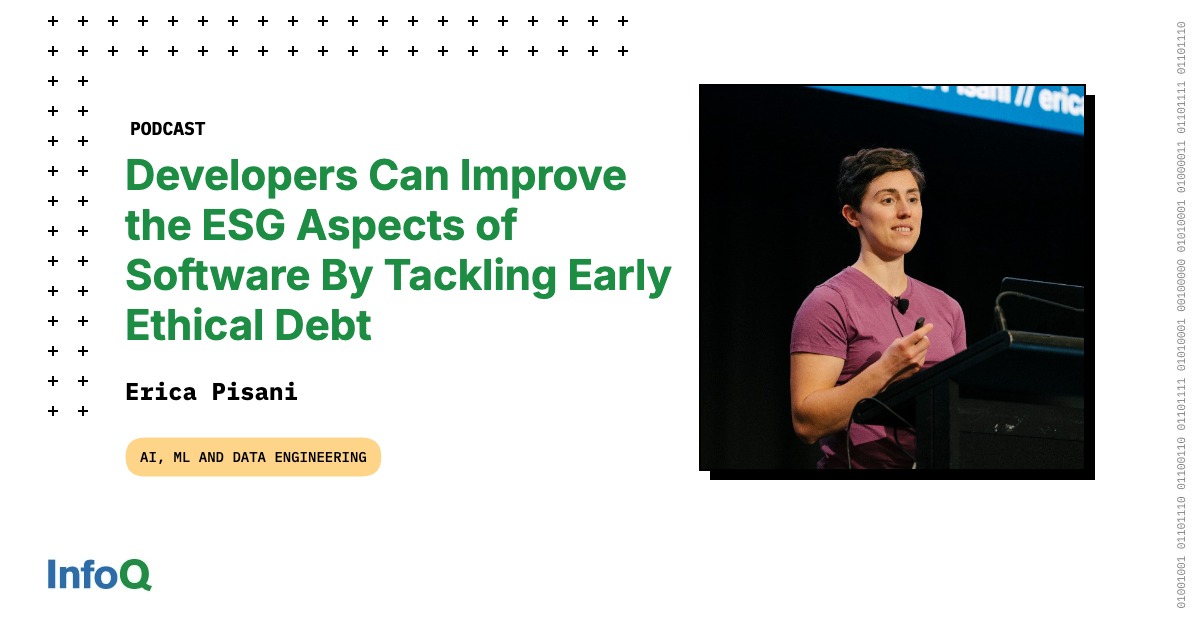
📖 Source: Podcast: Developers Can Improve the ESG Aspects of Software By Tackling Early Ethical Debt
Related Articles
Comments (0)
No comments yet. Be the first to comment!