
CRDTs, Eventual Consistency, and Distributed Databases

Alps Wang
Jan 13, 2026 · 1 views
Diving Deep: CRDTs and Corrosion
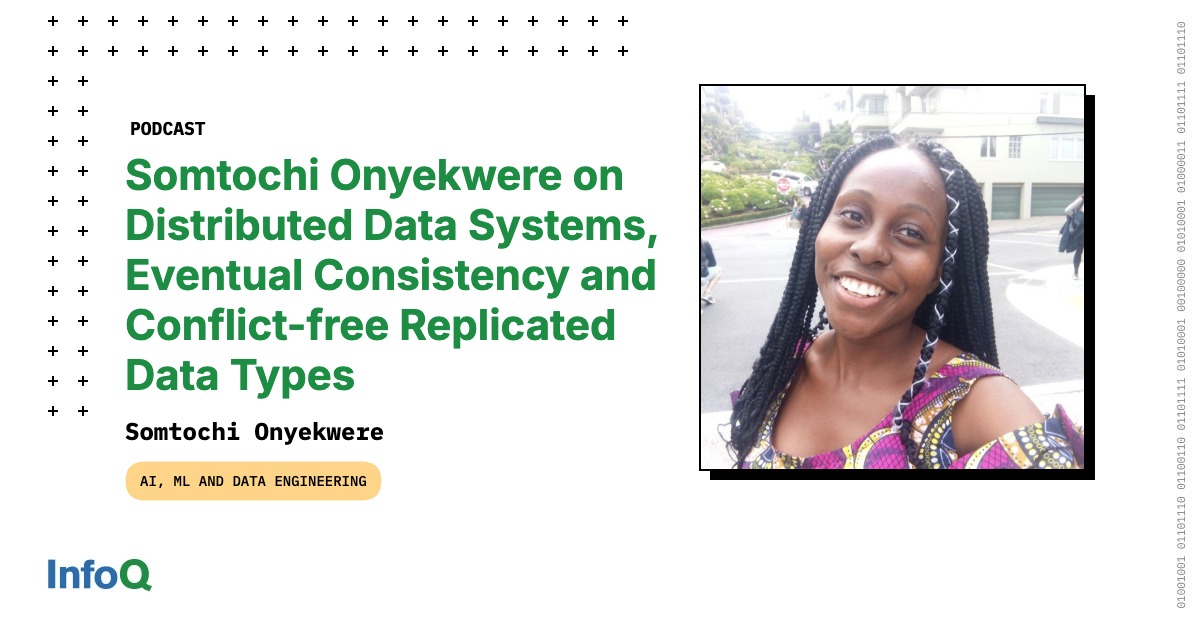
The podcast provides a clear and accessible overview of CRDTs and eventual consistency in the context of distributed data systems. The discussion of Corrosion, Fly.io's open-source distributed system, offers valuable insights into the practical challenges and trade-offs involved in building a fast, eventually consistent database. The use of CRDTs for conflict resolution is a particularly noteworthy aspect, as it allows for independent replicas to accept writes and update data without constant communication, ultimately improving performance and scalability. The interview with Somtochi Onyekwere, a key engineer at Fly.io, gives credibility and the real-world application of such abstract concepts.
However, while the podcast is informative, it lacks some depth. A deeper dive into the specific CRDT implementations used within Corrosion, including the underlying algorithms and data structures, would have been beneficial. Furthermore, a discussion of the challenges of debugging and monitoring an eventually consistent system, along with the strategies used to ensure data quality, could have added more value. Comparisons with alternative approaches, such as strong consistency models or other eventual consistency implementations, would have also helped to provide a broader context and highlight the advantages and disadvantages of the chosen approach. The podcast focuses on the practical application, yet could have explored some of the theoretical underpinnings more.
Key Points
- Eventual consistency is a viable approach for many internet applications, offering a trade-off between speed and strict data consistency.
- Conflict-free Replicated Data Types (CRDTs) enable fast, eventually consistent replication by allowing independent replicas to accept writes and merge their states.
- State-based CRDTs exchange full states, while operation-based CRDTs exchange operations, each with their own trade-offs regarding network requirements and potential for data duplication.
- Corrosion, Fly.io's distributed system, leverages CRDTs and eventual consistency to provide fast data replication and improve overall performance.
Related Articles
Comments (0)
No comments yet. Be the first to comment!