
Cloudflare's LLM Infrastructure: Speed and Efficiency Unveiled

Alps Wang
May 4, 2026 · 1 views
Disaggregating LLM Compute for Peak Performance
Cloudflare's announcement of its high-performance infrastructure for running LLMs is a significant step towards making these powerful models more accessible and efficient. The core innovation lies in disaggregating the LLM inference process into distinct prefill and decode stages, each optimized for different computational characteristics (compute-bound vs. memory-bound). This, combined with their custom 'Infire' inference engine, addresses a critical bottleneck in LLM deployment: efficient GPU utilization and reduced memory footprint. The ability to run models like Kimi K2.5 and Llama 4 Scout on fewer, more powerful GPUs, while still accommodating large context windows, is a testament to their engineering prowess. Furthermore, the introduction of 'Unweight' for model compression demonstrates a multi-pronged approach to tackling the resource intensity of LLMs.
This development is particularly noteworthy for its implications on latency and cost for applications relying on LLMs. By optimizing for throughput and latency through techniques like pipeline and tensor parallelism, Cloudflare aims to deliver faster responses, which is paramount for user-facing AI applications. The ability to run these models across their global network also suggests a potential for reduced geographical latency and increased availability. The broader impact extends to developers and organizations looking to deploy LLMs without massive upfront hardware investments, democratizing access to advanced AI capabilities. The focus on efficiency and performance directly combats the rising costs associated with LLM inference, making it a more viable option for a wider range of use cases. The article also subtly highlights the industry-wide challenge, referencing Cockroach Labs' report, underscoring the relevance and timeliness of Cloudflare's solution. The technical details around Infire's load balancing and cross-GPU communication optimization offer valuable insights into the engineering intricacies of large-scale AI model deployment.
Key Points
- Cloudflare has developed new infrastructure optimized for running large language models (LLMs) across its global network.
- Key innovation includes disaggregating LLM processing into separate prefill (compute-bound) and decode (memory-bound) stages.
- A custom inference engine, 'Infire', enhances GPU efficiency, reduces memory usage, and speeds up model startup.
- Techniques like pipeline and tensor parallelism are employed for optimal throughput and latency.
- Model compression via 'Unweight' further reduces memory load and speeds up inference.
- This infrastructure aims to make LLM deployment more efficient and cost-effective.
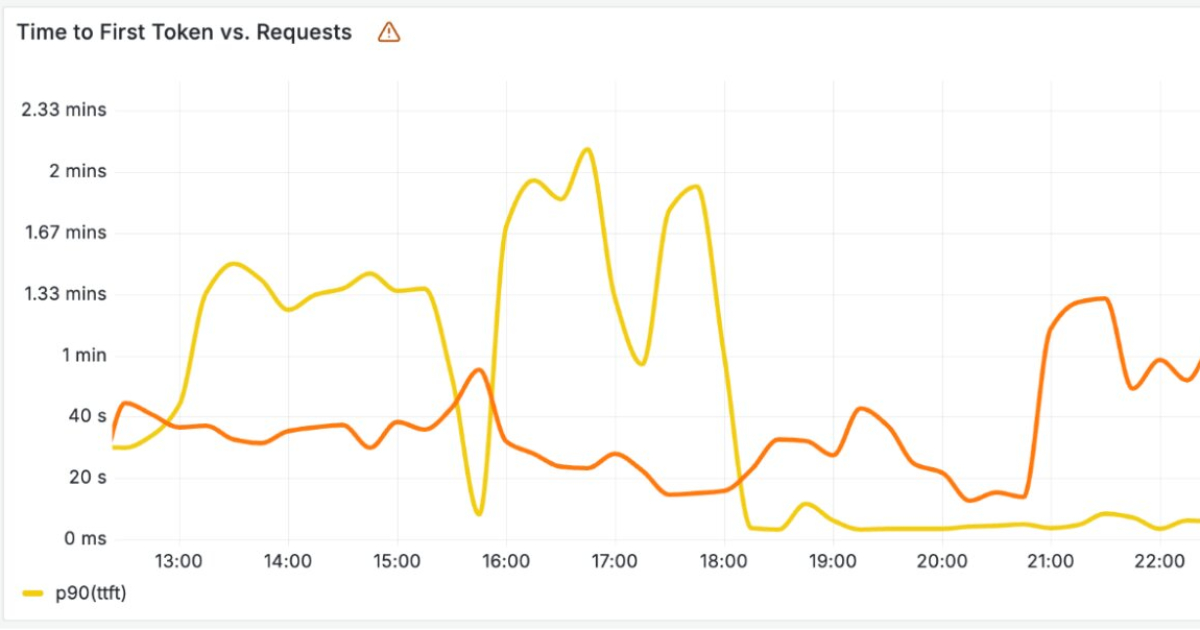
📖 Source: Cloudflare Builds High-Performance Infrastructure for Running LLMs
Related Articles
Comments (0)
No comments yet. Be the first to comment!