
Cloudflare's Cache Response Rules: Master Your Edge Cache

Alps Wang
Aug 15, 2026 · 1 views
Unlocking Finer Cache Control
Cloudflare's introduction of Cache Response Rules represents a significant stride in empowering developers to manage their edge caching strategies with unprecedented granular control. The ability to intercept and modify responses after they leave the origin but before they are committed to the cache is a game-changer. This directly tackles the persistent issue of 'cache-busting' headers, such as Set-Cookie, ETag, and Last-Modified, which, when inadvertently present, can render otherwise cacheable assets uncacheable. By allowing these headers to be stripped or modified at the edge without requiring origin code changes, Cloudflare is providing a powerful mechanism to improve cache hit rates, reduce origin load, and consequently, enhance application performance and lower infrastructure costs. The complementary nature of Cache Response Rules with existing Cache Rules is also a key insight, emphasizing a layered approach to caching logic: request-time rules for initial lookup and response-time rules for final cacheability decisions.
The innovation lies in extending the rules engine into the response phase, a critical juncture that was previously underserved for direct cache manipulation. This shift from purely request-centric caching to a more comprehensive request-and-response lifecycle control is noteworthy. For database and AI practitioners, this has direct implications. In AI, particularly with large models or frequently updated datasets served via CDNs, optimizing cache hits means faster inference and reduced egress costs. For databases, especially those serving API endpoints or static data snapshots, the ability to fine-tune caching based on response headers without altering the underlying database or application logic is invaluable. The simplification of CDN migrations is also a significant benefit, as it reduces the complexity of reconfiguring caching behaviors when moving between providers or updating infrastructure.
However, potential limitations or concerns might include the learning curve associated with understanding the interaction between request and response rules. Overly aggressive stripping or modification of headers could, in rare cases, lead to unintended consequences if developers aren't meticulous in their configuration. While the article mentions that some practitioners expressed skepticism about forcing caching of incorrectly classified dynamic content, this points to the importance of developer education and clear documentation. The feature is available across all Cloudflare plans, which is a positive for broad adoption. Ultimately, Cache Response Rules offer a robust solution for optimizing edge caching, reducing origin strain, and simplifying developer workflows, making it a valuable addition to the Cloudflare ecosystem.
Key Points
- Cloudflare introduced Cache Response Rules, a rules engine operating after origin responses but before caching.
- This new feature allows modification of cache-related headers (e.g.,
Set-Cookie,ETag,Last-Modified) without altering origin application code. - Key benefits include improved cache hit rates, reduced origin load, enhanced performance, and simplified CDN migrations.
- Cache Response Rules complement existing Cache Rules, providing a two-phase approach to caching decisions (request-time and response-time).
- The feature addresses common pain points where stray headers prevent effective caching, leading to performance degradation and increased costs.
- Available across all Cloudflare plans, making it accessible to a wide range of users.
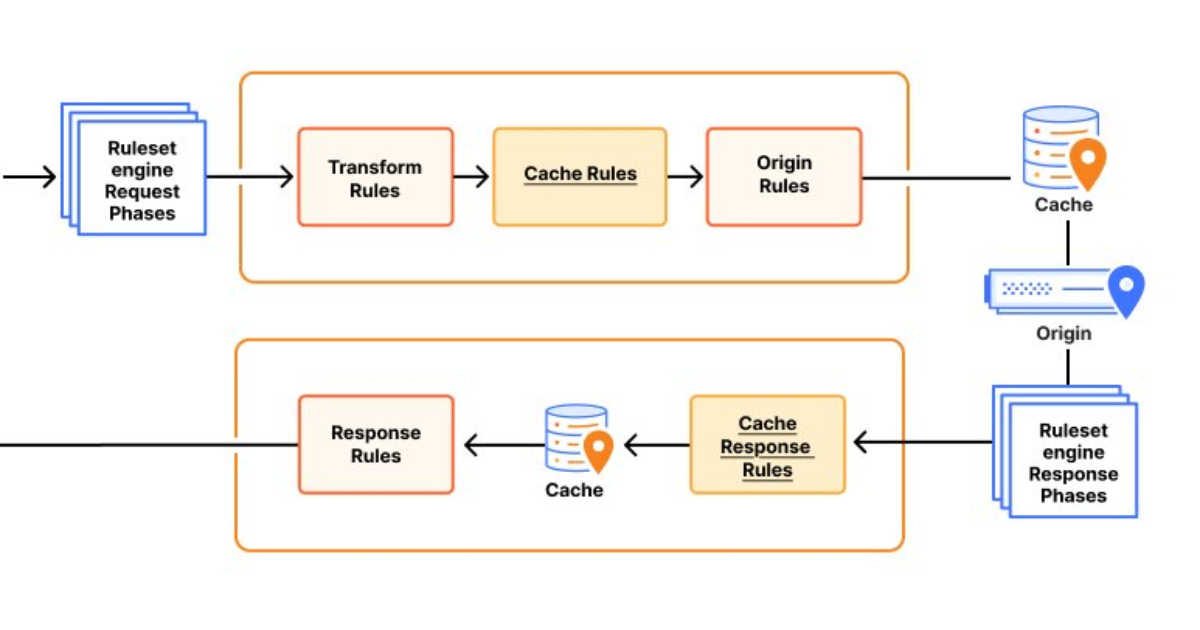
📖 Source: Cloudflare Introduces Cache Response Rules for Post-Origin Cache Control
Related Articles
Comments (0)
No comments yet. Be the first to comment!