
ChatGPT Ads: A New Era of Monetization

Alps Wang
Feb 10, 2026 · 1 views
Ads in ChatGPT: A Deep Dive
OpenAI's move to introduce ads in ChatGPT marks a pivotal moment in the evolution of AI-powered conversational interfaces. The core insight is the attempt to monetize the free and low-cost tiers of ChatGPT, ensuring the platform's sustainability and continued development. This is innovative in that it's a direct application of the advertising model to a sophisticated AI service, trying to balance user experience, privacy, and revenue generation. The emphasis on answer independence, conversation privacy, and user control are critical for user trust. However, there are limitations and potential concerns. The effectiveness of ad targeting, the potential for ad fatigue, and the long-term impact on user engagement remain to be seen. The article mentions safeguards against sensitive topics, but the line between 'sensitive' and 'relevant' can be blurry. The success of this model hinges on the quality and relevance of ads, as well as the user's perception of them.
Technically, the ad implementation involves matching ads based on conversation topics, past chats, and ad interactions. This requires robust data processing capabilities and sophisticated machine learning models for ad selection and relevance ranking. The system also needs to be scalable to handle a large volume of ad requests and user interactions. The reliance on aggregate information for advertisers, rather than direct access to user conversations, is a crucial design choice to protect user privacy. The comparison with existing solutions is complex. While advertising is common online, the conversational interface offers a new context. Unlike search engine advertising, where users actively seek information, ads in ChatGPT appear within a dynamic, ongoing dialogue. This requires a different approach to ad placement and relevance scoring. The success of this advertising model could influence how other AI chatbot platforms approach monetization. Ultimately, the long-term benefit depends on whether OpenAI can create an ad experience that enhances, rather than detracts from, the value of ChatGPT.
This will primarily benefit OpenAI, helping to fund its operations and future development. Businesses that advertise effectively will also benefit. The users will benefit if the ads are relevant and do not disrupt the conversation. However, the users might be negatively impacted by irrelevant or annoying ads. The technical implications involve the need for data infrastructure to handle ad serving, user data analysis (while maintaining privacy), and ad performance tracking. Further, the model might require the use of techniques like federated learning to preserve user privacy and maintain model accuracy.
Key Points
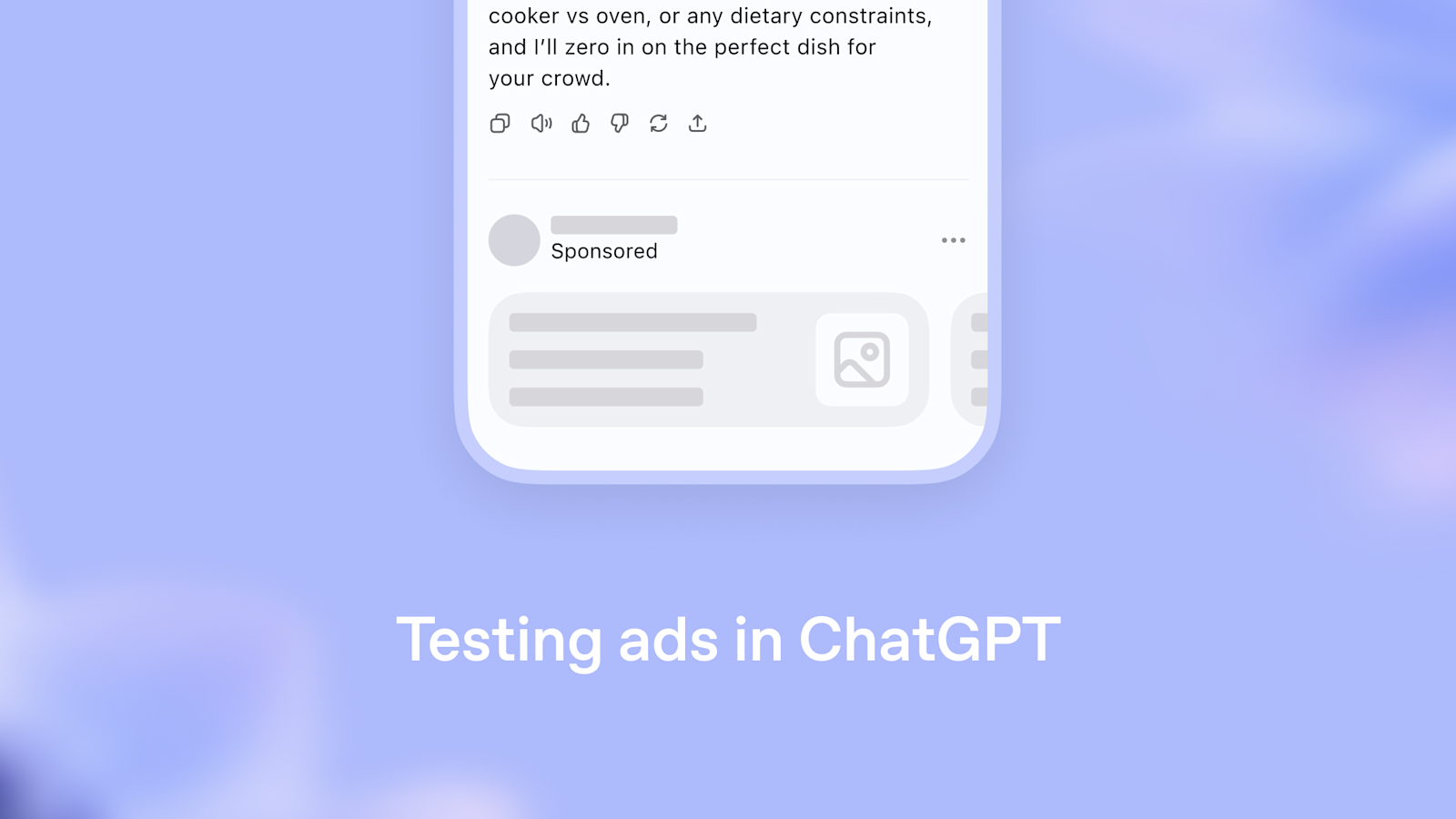
- OpenAI is testing ads in ChatGPT for free and Go users in the US.
- Ads will not influence answers and are clearly labeled as sponsored.
- Advertisers receive aggregate data; user conversations remain private.
- Users will have control over ad preferences and can opt out (with limitations).
- This aims to support broader access to ChatGPT and fund its development.
📖 Source: Testing ads in ChatGPT
Related Articles
Comments (0)
No comments yet. Be the first to comment!