
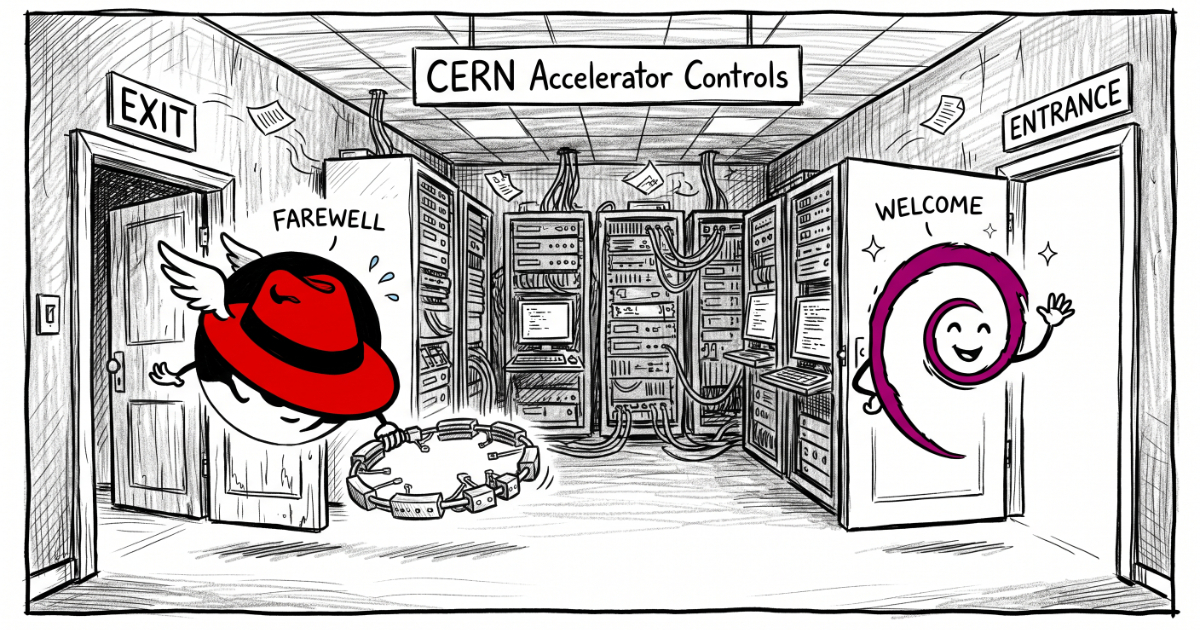
CERN Ditches RHEL for Debian on Critical Control Systems

Alps Wang
Sep 7, 2026 · 1 views
Embedded Systems' Architectural Imperative
CERN's decision to migrate its accelerator control infrastructure from Red Hat Enterprise Linux (RHEL) derivatives to Debian is a compelling case study in the pragmatic realities of long-term embedded system management, particularly within research environments. The primary driver, Red Hat's aggressive compiler microarchitecture baseline mandates (moving from x86-64-v1 to v2 and targeting v3), directly conflicts with CERN's need to support a vast fleet of specialized hardware, including legacy Core 2-era and custom industrial boards, designed for 10-15 year lifecycles. This highlights a fundamental tension between the rapid evolution of upstream software components, driven by performance gains and new hardware capabilities, and the stability, longevity, and cost-effectiveness required for deeply embedded and critical infrastructure. Debian's commitment to broader architecture support, especially its continued baseline x86-64 (v1) compatibility, directly addresses this obsolescence risk, allowing CERN to leverage existing, functional hardware for years to come. The integration of PREEMPT_RT patches into mainstream Debian kernels further solidifies its suitability for low-latency, real-time control tasks, a critical requirement for accelerator operations.
However, the transition is not without its challenges. The article touches upon the 'substantial tooling friction and complexity' associated with moving from RPM-based workflows to Debian's .deb packaging ecosystem. This implies significant engineering effort in adapting build systems, package management, and deployment pipelines. For organizations with similar embedded fleets and long support cycles, this migration underscores the importance of carefully evaluating the long-term support and architectural flexibility of their chosen operating system. While RHEL offers robust enterprise support, its evolving hardware requirements can become a significant barrier for specialized, long-lifecycle deployments. Alternatives like Debian, while potentially requiring more in-house expertise for certain specialized tasks, can offer greater architectural freedom and cost predictability for such use cases. This move by CERN is a strong signal that for certain critical, long-lived embedded systems, the perceived stability of enterprise Linux distributions might come at the cost of flexibility and an increasing risk of forced hardware obsolescence.
Key Points
- CERN is migrating its accelerator control infrastructure from RHEL-based systems to Debian.
- The primary technical driver is Red Hat's increasing compiler microarchitecture baseline requirements (e.g., x86-64-v2, x86-64-v3) which threaten to obsolete CERN's legacy and custom industrial hardware.
- Debian was chosen for its continued support of baseline x86-64 (v1) architecture, extensive package repository, and compatibility with industrial tooling.
- The integration of PREEMPT_RT patches into mainstream Debian kernels enables it to meet real-time scheduling needs.
- This migration is strictly limited to ~2,200 embedded accelerator control machines; CERN's data centers and compute farms will remain on AlmaLinux and RHEL.
- Challenges include potential tooling friction and complexity in transitioning from RPM to Debian's packaging ecosystem.
📖 Source: CERN Renounces RHEL in Favor of Debian for Its Accelerator Controls Infrastructure
Related Articles
Comments (0)
No comments yet. Be the first to comment!