
Async API Mastery: From Chaos to Control

Alps Wang
Mar 18, 2026 · 1 views
Scaling Async APIs: A Blueprint
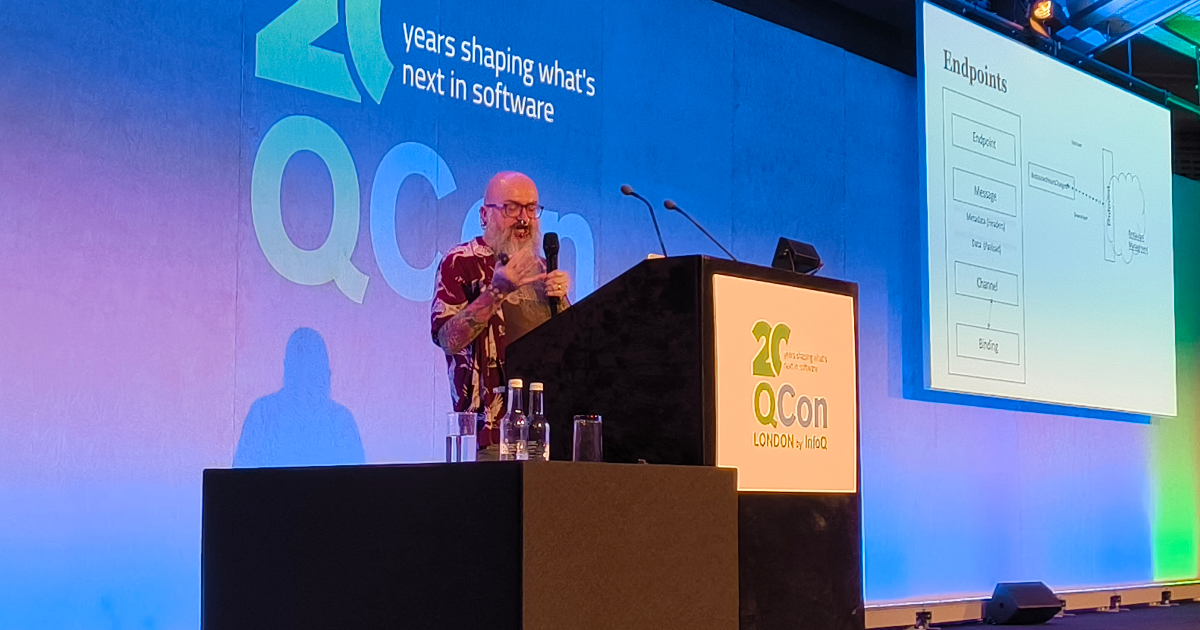
Ian Cooper's presentation at QCon London 2026, as detailed by InfoQ, tackles a pervasive issue in large-scale software development: the unmanageable complexity of asynchronous APIs. The core insight is the transition from informal, knowledge-dependent event-driven architectures to a formalized, specification-driven approach. The emphasis on explicit interface definitions, leveraging tools like AsyncAPI and schema registries, is crucial. This shift from 'ad-hoc' to 'governed' practices directly addresses the fragility that emerges with scale, where undocumented changes and lack of discoverability lead to system breakdowns. Cooper's framework, built on discovery, governance, and provisioning, offers a structured path forward, advocating for a cultural shift alongside tooling adoption.
The innovation lies in treating asynchronous APIs with the same rigor as synchronous ones, a concept that seems obvious but is often neglected in practice. The article highlights how specifications can become the single source of truth, driving code generation, schema registration, and infrastructure provisioning. This automation is key to reducing manual coordination, which Cooper rightly points out is a major bottleneck. The mention of tools like EventCatalog and Marmot provides concrete examples of how these principles can be implemented. However, a potential limitation or concern is the 'tooling and adoption is still very hard' caveat. While the benefits are clear, the practical implementation of such a cultural and technical transformation within an organization, especially one with legacy systems or deeply ingrained development habits, remains a significant hurdle. The article implicitly suggests that this is not a quick fix but a long-term strategic initiative.
This discussion would benefit a wide range of professionals, from senior engineers and architects grappling with distributed systems to platform engineers responsible for messaging infrastructure. Developers working in microservices, event-driven architectures, and any domain where inter-service communication is asynchronous will find practical guidance. The technical implications are profound, suggesting a future where event contracts are as rigorously managed as API schemas, leading to more robust, maintainable, and scalable systems. Cooper's argument for standardized metadata (like CloudEvents) and robust schema compatibility modes is technically sound and addresses real-world pain points of integration and evolution. Compared to ad-hoc solutions, this approach offers a predictable and auditable way to manage the complexity inherent in event-driven systems, moving beyond simple documentation to active management and automation.
Key Points
- Event-driven architectures often become fragile at scale due to informal practices and lack of discoverability.
- Managing asynchronous APIs requires a shift towards explicit specifications, akin to synchronous APIs.
- Key pillars for managing async APIs at scale are discovery, governance, and provisioning.
- Technologies like AsyncAPI and schema registries provide machine-readable descriptions of event contracts.
- Standardized metadata (e.g., CloudEvents) and schema registries are crucial for consistent event structures and safe evolution.
- Automation is critical, with endpoint specifications driving code generation, schema registration, and infrastructure provisioning.
- Cultural change is as important as tooling for successful adoption of these practices.
- Tools like EventCatalog and Marmot aid in visibility, discoverability, and governance of async APIs.
📖 Source: QCon London 2026: Managing Asynchronous APIs at Scale
Related Articles
Comments (0)
No comments yet. Be the first to comment!