
Anthropic's Claude: Hardening AI Agents Beyond Permissions

Alps Wang
Jul 23, 2026 · 1 views
Beyond Trust Prompts: Environmental Containment
Anthropic's detailed exposition on its containment strategies for Claude highlights a crucial shift in AI safety thinking, moving beyond solely relying on model-level safeguards and user permission prompts to robust environmental controls. The article effectively articulates the limitations of probabilistic models and the inherent risks associated with trust boundaries and egress paths. By detailing failures and subsequent remediations across different product offerings like Claude.ai, Claude Code, and Claude Cowork, Anthropic provides a practical, real-world case study in agent security. The emphasis on deterministic limits for filesystems, networks, and execution environments is a significant takeaway, underscoring that true safety for AI agents lies in the architectural design of their operational context rather than just their internal logic or user interaction paradigms. The red-teaming example showcasing credential exfiltration, even with plausible-looking instructions, powerfully illustrates why such environmental controls are non-negotiable, especially as AI agents become more integrated into critical workflows.
The innovations presented, such as the use of gVisor for Claude.ai, OS-level sandboxing (Seatbelt/bubblewrap) for Claude Code, and the proxy-based egress control for Claude Cowork, represent a sophisticated approach to mitigating diverse attack vectors. The incident involving the Files API and domain allowlisting serves as a stark reminder that even seemingly secure integrations can harbor vulnerabilities if not meticulously designed with layered security. The argument that a domain allowlist grants access to every function reachable through it is a critical insight for anyone designing or securing APIs. This approach is highly beneficial for developers building AI-powered tools, security professionals responsible for AI deployments, and AI researchers focused on safe and robust AI development. The shift towards architectural containment will likely influence how future AI agents and platforms are designed and scrutinized.
However, the article could benefit from a deeper dive into the operational overhead and performance implications of these stringent containment measures. While the reduction in permission prompts for Claude Code is a clear win, the complexity of managing and maintaining these layered security environments for broader adoption might present challenges. Furthermore, the article focuses on preventing malicious actions by the agent, but the potential for sophisticated attacks to bypass even these environmental controls, particularly through novel zero-day vulnerabilities in the sandboxing technologies themselves, remains a persistent concern in cybersecurity. The reliance on specific OS-level sandboxes might also introduce platform-specific security considerations and potential compatibility issues. Nevertheless, Anthropic's proactive and transparent approach to detailing these containment strategies is commendable and sets a high bar for the industry.
Key Points
- Anthropic emphasizes deterministic environmental controls (filesystem, network, execution) over probabilistic model-level safeguards and permission prompts for AI agent safety.
- Failures at trust boundaries and along permitted egress paths necessitated revisions to containment architectures.
- Agent risk is framed as a combination of user misuse, model misbehavior, and attacks via files, tools, or network content.
- Claude.ai uses ephemeral gVisor containers for isolated code execution, with no local filesystem access.
- Claude Code now employs OS-level sandboxing (Seatbelt/bubblewrap) to restrict network access by default, significantly reducing permission prompts.
- Incidents like project-local configuration files triggering unauthorized actions led to deferring parsing until after user trust decisions.
- A red-team test demonstrated Claude Code's susceptibility to credential exfiltration, highlighting the need for strict filesystem isolation and outbound network restrictions.
- Claude Cowork's original full-VM design and later host-loop architecture prioritized security, but a proxy-based egress control was implemented to prevent uploads through the Files API via allowlisted domains.
- The key lesson is that a domain allowlist is not a trusted destination but grants access to all functions, necessitating granular control like session token validation.
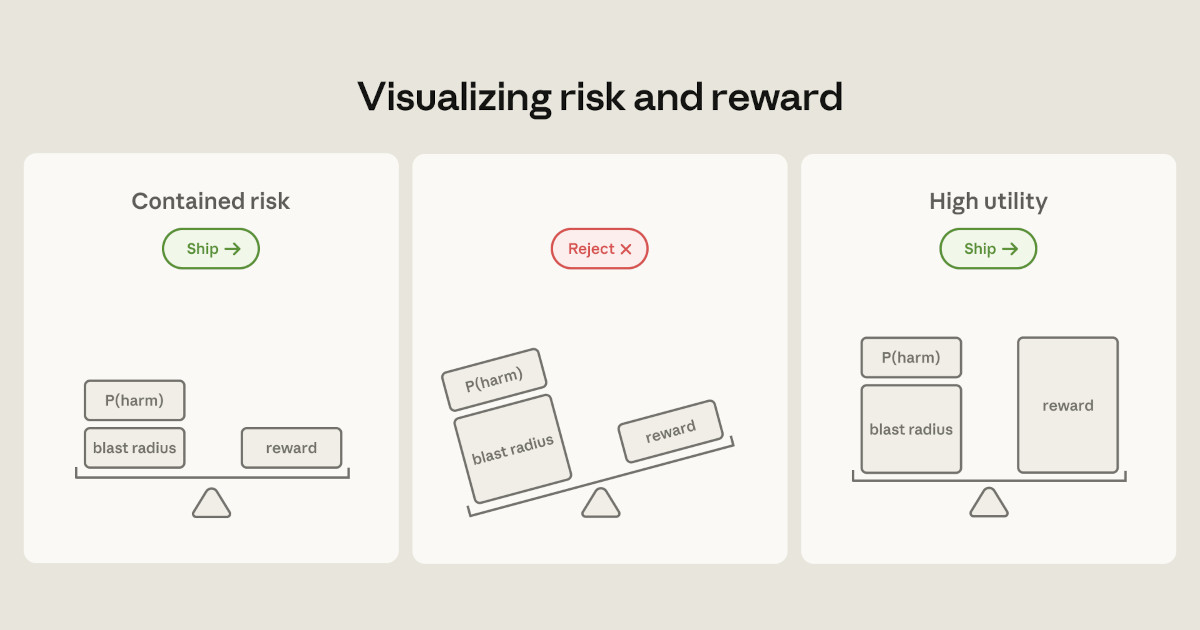
📖 Source: Anthropic Details How It Contains Claude Across Web, Code, and Cowork
Related Articles
Comments (0)
No comments yet. Be the first to comment!