
Airbnb's Contextual Identity: Privacy-First Socialization

Alps Wang
May 14, 2026 · 1 views
Contextual Identity: A New Paradigm for Social Privacy
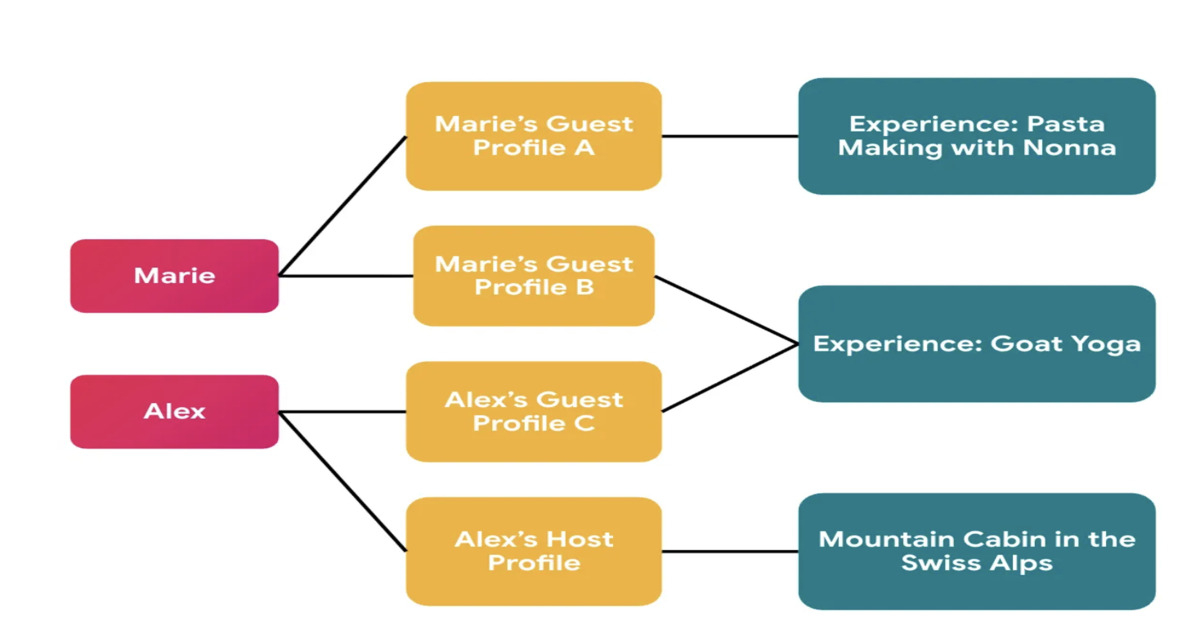
Airbnb's implementation of a context-aware identity model is a significant step towards balancing user privacy with the desire for richer social interactions on their platform. The core innovation lies in decoupling global user identity from experience-specific profiles. This effectively creates isolated social graphs for each activity, preventing the unintended leakage of personal information across disparate user engagements. The reliance on an internal authorization framework like Himeji, enforcing relationship-based access control at the data access layer, is a robust architectural choice that ensures consistent privacy guarantees, moving beyond superficial interface-level restrictions. This approach not only addresses the immediate need for privacy in new social features but also sets a precedent for how large-scale platforms can manage identity in an increasingly privacy-conscious world.
The migration process itself is noteworthy, highlighting the challenges of overhauling identity management in a complex, existing codebase. The use of AI-assisted refactoring tools, combined with a human-in-the-loop validation process, demonstrates a pragmatic and scalable approach to such a critical undertaking. This blend of automation and manual oversight is crucial for maintaining accuracy and business logic integrity during large-scale system changes. The collaborative effort involving engineering, product, privacy, and legal teams underscores the multifaceted nature of implementing such foundational changes. This initiative is particularly beneficial for companies looking to introduce or enhance social functionalities without compromising user data security, and for developers seeking to understand best practices in privacy-preserving identity management. The ability to isolate user data based on context is a powerful tool for fostering trust and enabling more nuanced user experiences. However, a potential limitation could be the increased complexity in managing these multiple context-specific profiles, which might introduce new debugging challenges or require more sophisticated tooling for developers working within the Airbnb ecosystem. The long-term maintainability and scalability of such a granular identity system will be a key factor to monitor.
Key Points
- Airbnb has implemented a context-aware identity model to support privacy-first social features.
- The new model replaces a single global profile with multiple context-specific profiles tied to individual Experiences.
- This approach isolates user identities across different Experiences, preventing cross-context linkage.
- Access to profile data is governed by shared participation within a specific context.
- The system is enforced through Airbnb's internal authorization framework, Himeji, using relationship-based access control at the data access layer.
- A large-scale migration was undertaken, utilizing AI-assisted refactoring tools and manual reviews.
- Collaboration across engineering, product, privacy, and legal teams was crucial for successful implementation.
📖 Source: Airbnb Implements Context-Aware Identity Model to Support Privacy-First Social Features
Related Articles
Comments (0)
No comments yet. Be the first to comment!