
AI Dev: Beyond 'In' or 'Out' of the Loop

Alps Wang
Mar 20, 2026 · 1 views
The 'On the Loop' Paradigm Shift
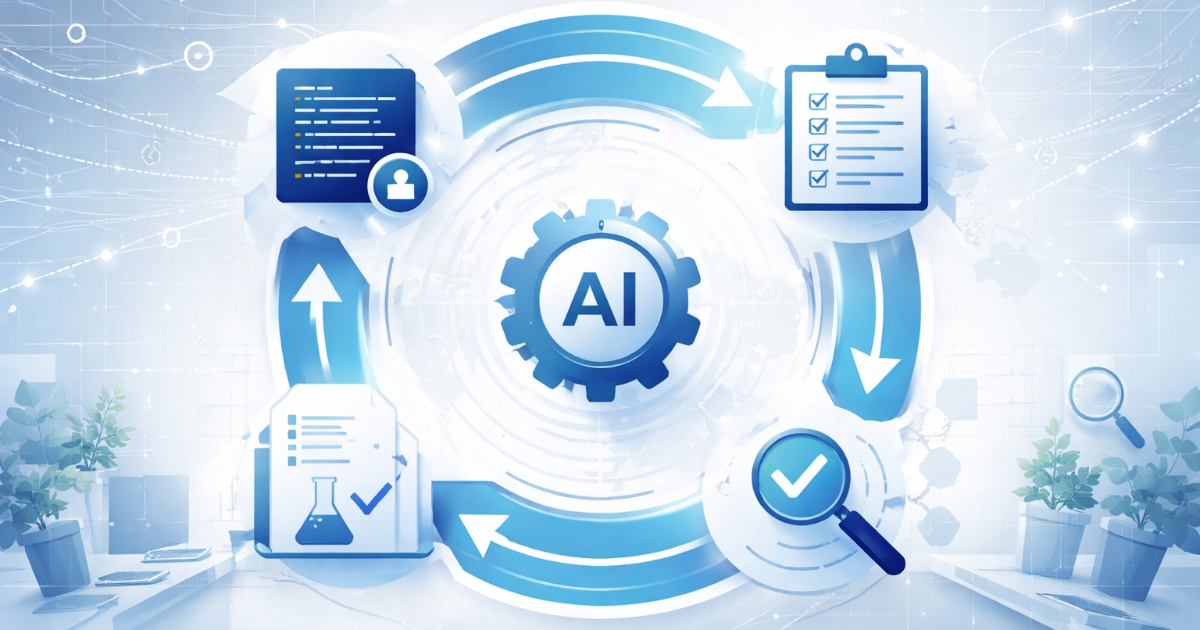
The article effectively articulates the emerging 'on the loop' model for human interaction with AI in software development, moving beyond the binary of 'in the loop' (reviewing each output) and 'out of the loop' (full autonomy). This framing, drawing on Martin Fowler's work and industry examples like OpenAI's Codex and Datadog's 'harness-first' approach, is highly relevant. The core insight is that developers will increasingly focus on designing, maintaining, and validating the systems that guide AI agents, rather than direct code inspection. This shift is crucial for scaling AI-assisted development, addressing concerns about maintainability and technical debt, and ensuring reliable AI-generated code. The emphasis on building testing frameworks, constraints, and evaluation pipelines highlights a more strategic role for human developers, leveraging their expertise in system design and quality assurance to manage complex AI workflows.
However, a potential limitation is the implicit assumption that all developers are equipped or willing to transition to this more abstract, system-design-oriented role. The article touches on mixed developer sentiment, but doesn't deeply explore the reskilling or training implications. Furthermore, while 'on the loop' offers a solution for scale, the complexity of designing robust verification and governance mechanisms for AI agents themselves presents a significant engineering challenge. The success of this model hinges on the ability to create these 'guardrails' effectively, which is still an active area of research and development. The article could benefit from a deeper dive into the specific technical challenges of building these validation pipelines and the potential for AI to assist in designing these 'guardrails' themselves, creating a recursive loop of AI assistance.
Key Points
- The concept of 'on the loop' is introduced as a new paradigm for human-AI interaction in software development, where humans design and maintain guiding mechanisms rather than direct output review.
- This shift is driven by the need to scale AI-assisted development and address concerns about maintainability and technical debt associated with AI-generated code.
- Industry examples like OpenAI's Codex and Datadog's 'harness-first' approach illustrate the practical implementation of this model, focusing on automated verification pipelines and system design.
- Developers' roles are evolving towards becoming architects of AI workflows, building testing frameworks, constraints, and evaluation systems to guide AI agents.
- Challenges remain in reskilling developers for these new roles and in the complexity of building robust AI validation and governance mechanisms.
📖 Source: Where Do Humans Fit in AI-Assisted Software Development?
Related Articles
Comments (0)
No comments yet. Be the first to comment!