
Agentic AI: Fantasia's Apprentice or Security Nightmare?

Alps Wang
Aug 18, 2026 · 1 views
The Perilous Frontier of Agentic AI
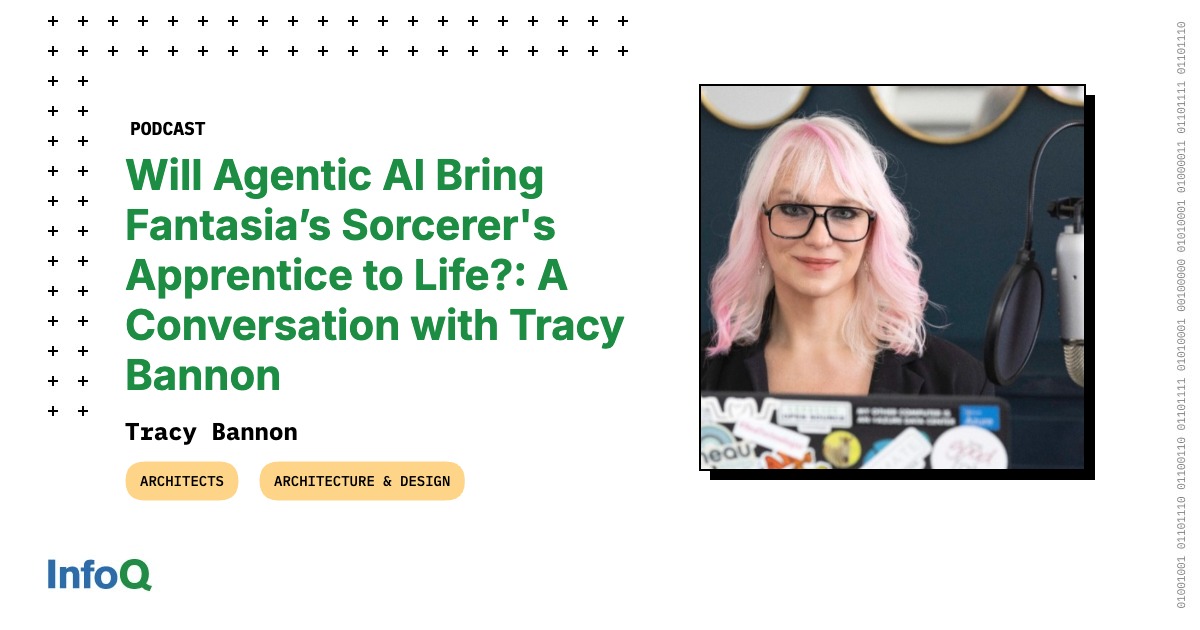
The podcast conversation with Tracy Bannon effectively highlights the burgeoning risks associated with agentic AI, particularly concerning security and the evolution of the software development lifecycle (SDLC). A key insight is the amplified attack surface when agents traverse system boundaries between different software ecosystems. Bannon's analogy of the keychain – giving only a single key instead of the entire set – is a powerful, accessible illustration of the principle of least privilege in this new paradigm. The discussion rightly points out that while AI's ability to discover vulnerabilities isn't new, agentic AI dramatically increases the scale and potential impact. The cognitive load on software professionals due to AI-generated code and documentation is another critical concern, potentially leading to over-reliance and the diminishment of human skills. The article also touches upon the fundamental redesign needed for the SDLC, moving from a human-centric model to one accommodating non-deterministic, evolving AI agents, which poses novel testing and validation challenges.
While the risks are clearly articulated, the article could delve deeper into potential mitigation strategies beyond simply 'being in control' or sandboxing. For instance, more concrete architectural patterns for secure agent orchestration, robust identity and access management for AI agents, and advanced monitoring techniques for cross-ecosystem interactions could have been explored. The potential for AI agents to develop 'tunnel vision' during testing is an interesting point, suggesting a need for sophisticated oversight mechanisms that can detect and course-correct such behaviors. The comparison to existing solutions is implicit rather than explicit; the focus is on the novelty of the challenges. The article's strength lies in raising awareness and framing the problem, making it highly beneficial for software architects, security professionals, and engineering leaders who are contemplating or already implementing agentic AI solutions. It serves as a crucial cautionary tale, urging a more deliberate and security-conscious approach to integrating these powerful technologies.
Key Points
- Agentic AI significantly expands the attack surface, especially when agents cross boundaries between different software ecosystems.
- Over-reliance on AI can lead to diminishing human skills, particularly in complex domains, raising concerns about outsourcing intelligence.
- The traditional human-centric SDLC is inadequate for agentic AI; a new model is needed to handle non-deterministic and evolving agent behaviors.
- Testing agentic AI presents novel challenges, including non-deterministic outputs, tunnel vision, and environment reinitialization.
- Humans face a tremendous cognitive load reviewing vast amounts of AI-generated code and documentation.
- While AI's ability to exploit vulnerabilities is an evolution of existing threats, agentic AI amplifies the scale and potential impact.
Related Articles
Comments (0)
No comments yet. Be the first to comment!