
Agent Trace: Standardizing AI Code Attribution

Alps Wang
Feb 5, 2026 · 1 views
Deciphering Agent Trace's Impact
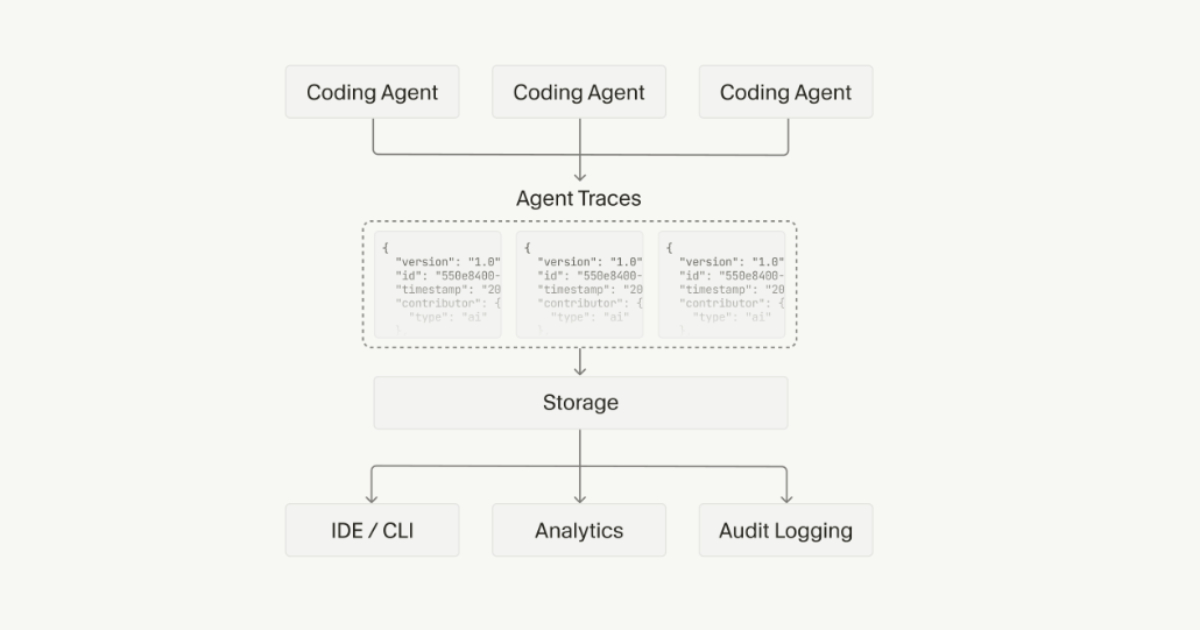
Agent Trace tackles a crucial problem in the age of AI-assisted coding: the lack of clear attribution for AI-generated code. The specification's vendor-neutral approach and focus on interoperability are commendable. The JSON-based trace record format is flexible and allows for extensibility, enabling future enhancements. The inclusion of optional model identifiers is particularly valuable for precise attribution. However, the RFC nature of Agent Trace also highlights its limitations. The specification doesn't address complex scenarios like merges, rebases, and large-scale agent-driven changes, leaving open important questions about how to handle collaborative AI-human workflows. Furthermore, while the storage-agnostic design is a strength, it also places the burden of implementation on individual vendors and developers, potentially leading to fragmentation if adoption isn't widespread. The success of Agent Trace hinges on broad industry adoption and the development of robust tools to integrate it into existing development environments.
From a technical perspective, the reliance on content hashes for tracking attributed code, especially when refactoring is considered, is a smart move. This addresses the problem of code movement and modification during development. The support for multiple version control systems (Git, Jujutsu, Mercurial) is also important to broaden its appeal. Nevertheless, the specification's lack of focus on code quality or training data provenance could be a missed opportunity. Although the primary focus is on attribution, integrating some basic level of quality metrics or links to training data might have enhanced its value, particularly for debugging and auditing purposes. The real challenge will be in getting the tooling ecosystem to fully embrace and implement Agent Trace, creating a seamless experience for developers. The success of this initiative is highly dependent on developer buy-in and the availability of tools that make it easy to adopt and utilize.
Key Points
- The specification is vendor-neutral, storage-agnostic, extensible, and focuses on attribution without assessing code quality or tracking training data.
📖 Source: Agent Trace: Cursor Proposes an Open Specification for AI Code Attribution
Related Articles
Comments (0)
No comments yet. Be the first to comment!